Introduction
A small error in tank level measurement can cause production losses or safety risks. Modern facilities therefore require reliable monitoring solutions. A durable Tank Level Indicator provides clear, real-time visibility of liquid levels in storage tanks. Magnetic indicator systems are widely used because they combine simple mechanical design with stable performance in demanding industrial environments. In this article, you will learn how magnetic Tank Level Indicator systems work, why they improve operational efficiency, and how they help industries streamline liquid level management across chemical plants, tank farms, and water treatment facilities.
Understanding Magnetic Indicator Systems in Tank Level Indicator Technology
What Is a Magnetic Tank Level Indicator and How It Works
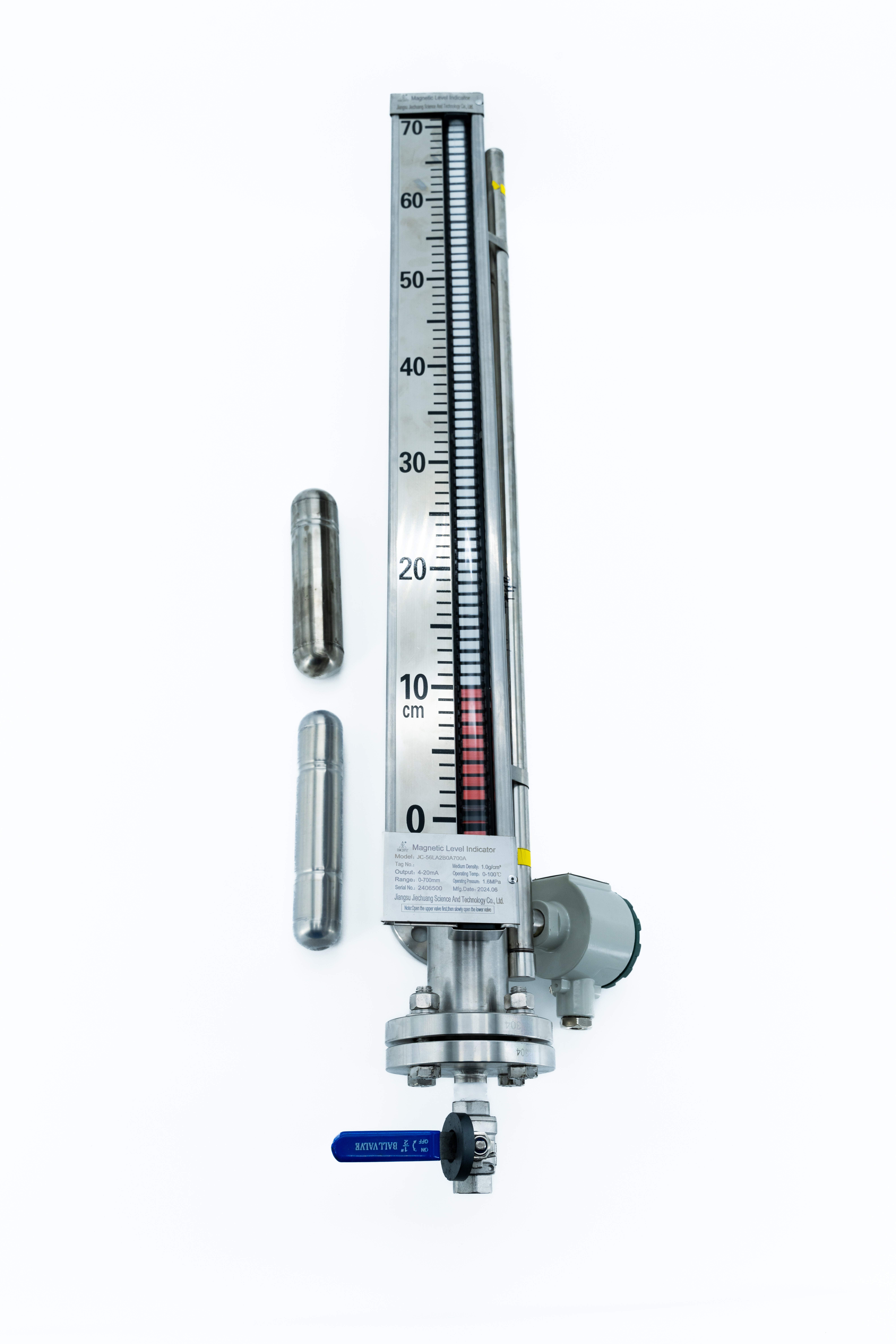
A magnetic Tank Level Indicator measures liquid levels using a magnetic float inside a sealed chamber. The float moves up or down as the liquid level changes. Inside the float sits a permanent magnet. This magnet interacts with an external indicator mounted outside the chamber. When the float moves, the magnetic coupling triggers the external display, showing the exact liquid level. Because the indicator sits outside the tank, operators can read it easily without direct contact with the process fluid. This design provides continuous and reliable level monitoring for industrial tanks.
Key Components of a Durable Magnetic Tank Level Indicator
Durable magnetic level indicators rely on several mechanical and structural components that work together to ensure stable and visible liquid level measurement. Each component has a specific function, material requirement, and operating range designed to maintain reliability in industrial tank environments.
| Component | Function in System | Typical Materials | Key Technical Specifications | Common Applications | Installation / Design Notes |
| Magnetic Float | Moves with liquid level and activates the external indicator through magnetic coupling | 316L Stainless Steel, Titanium, PVDF, PP | Float density typically 0.45–0.80 g/cm³ depending on liquid density; temperature rating up to 200°C (392°F) for metal floats | Chemical storage tanks, oil storage vessels, water treatment tanks | Float density must match process liquid density to maintain buoyancy; corrosion-resistant material recommended for aggressive fluids |
| Float Chamber (Bypass Chamber) | Contains the float and connects to the tank, allowing liquid to enter and follow tank level | Carbon Steel, 304/316 Stainless Steel, Alloy Steel | Typical chamber diameter 40–100 mm; pressure rating commonly PN16–PN40 (16–40 bar); operating temperature −40°C to 300°C depending on material | Petrochemical storage tanks, process vessels, refinery tanks | Installed vertically along tank side; chamber must be aligned to ensure free float movement |
| Indicator Rail / Flag Display | Provides external visual level indication through magnetic flags or rollers | Aluminum alloy housing, stainless steel frame, UV-resistant plastics | Display resolution typically 10 mm – 20 mm increments; viewing distance up to 20–30 m depending on flag size | Tank farms, outdoor storage systems, industrial utilities | Mounted externally along the chamber; requires clear viewing line for operators |
| Magnetic Coupling System | Transfers float movement to external indicator without direct mechanical connection | Permanent magnets (Neodymium or Ferrite) | Magnetic strength typically 800–1200 Gauss depending on design; coupling distance usually 6–20 mm through chamber wall | Chemical processing plants, hazardous media tanks | Chamber wall thickness must allow reliable magnetic transmission |
| Process Connections | Connects chamber to tank allowing liquid level equalization | Flanged connections (ANSI, DIN), threaded NPT connections | Common sizes DN20–DN50 or ¾″–2″ NPT; flange ratings ANSI Class 150–600 | Oil storage tanks, water treatment vessels, process reactors | Upper and lower connections required to ensure proper liquid circulation |
| Indicator Housing | Protects the display mechanism from environmental exposure | Powder-coated aluminum, stainless steel | Protection rating often IP65–IP67 for outdoor installations | Outdoor tank farms, industrial processing facilities | Housing should resist UV exposure, rain, and dust |
| Optional Level Transmitter | Converts float movement to electrical signal for remote monitoring | Magnetostrictive or reed chain transmitters | Standard output 4–20 mA, HART, or Modbus; measurement range up to 6–12 m typical | SCADA systems, automated tank monitoring | Often mounted inside or alongside chamber for hybrid monitoring systems |
Tip:When selecting a magnetic Tank Level Indicator, ensure float density and material compatibility match the process liquid. Improper float selection can reduce measurement accuracy in fluids with unusual densities or corrosive properties.
Why Magnetic Systems Simplify Tank Level Monitoring
Magnetic level systems simplify tank monitoring because they offer direct visual indication. Operators can check the level instantly without complicated calibration or electronic configuration. The mechanical design remains stable even in environments with vapor or temperature fluctuations. In addition, the external display provides a clear and continuous reading that can be observed from a distance. Many facilities use a magnetic Tank Level Indicator as the primary visual reference for operators while automated systems collect digital data. This dual visibility improves process awareness and operational efficiency.

How Magnetic Tank Level Indicator Systems Streamline Liquid Level Management
Real-Time Visual Monitoring for Faster Operational Decisions
Real-time visibility plays a critical role in tank management. A magnetic Tank Level Indicator allows operators to observe tank levels instantly without relying on electronic dashboards alone. When liquid levels change during filling or discharge operations, the indicator moves accordingly. This immediate feedback allows staff to react quickly and adjust process flow if necessary. In busy industrial environments, fast decisions reduce downtime and prevent operational disruptions. Clear visual monitoring therefore supports efficient plant operations and helps teams maintain steady production.
Reducing Operational Complexity in Tank Monitoring
Many electronic level devices require programming, calibration, or specialized setup. Magnetic indicators avoid this complexity through a straightforward mechanical design. The float movement directly drives the level display, eliminating the need for complex signal processing. This simplicity allows technicians to install and operate the system with minimal configuration. As a result, facilities can maintain reliable tank monitoring without increasing maintenance workload. A durable Tank Level Indicator therefore helps organizations streamline daily operations and maintain consistent monitoring across multiple tanks.
Supporting Continuous Process Control with Reliable Tank Level Indicators
Stable level measurement is essential for continuous production processes. Magnetic indicators provide consistent readings because the float directly tracks the liquid surface. Changes in process conditions rarely disturb the measurement. This stability ensures reliable monitoring across chemical storage tanks, blending systems, and industrial reservoirs. When engineers rely on accurate data, they can control filling cycles and maintain optimal tank capacity. A well-designed Tank Level Indicator supports process continuity while reducing unnecessary product waste.
Enhancing Tank Inventory Management and Process Efficiency
Accurate tank monitoring improves inventory control across industrial operations. By using a magnetic Tank Level Indicator, operators always know how much liquid remains in storage tanks. This information supports better supply planning and prevents unexpected shortages. Clear visual level tracking also helps facilities maximize tank utilization. When tanks operate near their optimal capacity, production efficiency increases. Many companies combine magnetic indicators with digital monitoring systems to create a complete inventory management strategy.
Performance Advantages of Durable Magnetic Tank Level Indicators
Long-Term Reliability in Demanding Industrial Environments
Industrial tanks often operate in harsh environments. Temperature variations, chemical exposure, and pressure changes may affect measurement devices. Durable magnetic indicators address these conditions through strong construction materials. Stainless steel chambers and corrosion-resistant components ensure long-term performance. This rugged design allows a Tank Level Indicator to operate reliably in chemical plants, oil facilities, and water treatment systems. Companies benefit from consistent measurement even in demanding industrial environments.
Stable Measurement Independent of Process Conditions
Magnetic level indicators measure the liquid surface directly through buoyancy, which keeps readings stable even when process variables fluctuate. Unlike pressure-based or acoustic sensors, float operation does not depend on vapor composition or dielectric changes. The sealed chamber isolates the measurement zone from turbulence inside the tank. Proper chamber sizing and vertical installation ensure smooth float movement and accurate tracking. Engineers often use this design in chemical tanks or fuel storage where stable readings are required for reliable inventory control and process consistency.
Low Maintenance Operation for Continuous Tank Monitoring
Magnetic indicators are widely selected for long-term monitoring because their mechanical structure minimizes wear and service requirements. The float moves freely without gears or electronic probes inside the process fluid, which reduces fouling and mechanical fatigue. Periodic inspection normally focuses only on verifying float movement and checking chamber cleanliness. Many installations operate for years without component replacement. In large tank farms or water treatment plants, this reliability helps maintenance teams reduce routine service tasks and keep monitoring systems continuously operational.
Comparing Magnetic Tank Level Indicators with Other Level Measurement Technologies
Magnetic Indicators vs Radar Tank Level Indicators
Radar level transmitters calculate distance using microwave signals and time-of-flight measurement. They are widely used in automated systems because they provide continuous digital output such as 4–20 mA or HART communication. Magnetic indicators serve a different operational role by offering a physical and highly visible reference for tank level verification. Engineers often install both devices on the same vessel. Radar supports remote monitoring and control systems, while the magnetic Tank Level Indicator gives operators a clear visual confirmation during inspections or emergency checks.
Magnetic Indicators vs Submersible Level Sensors
Submersible level sensors determine liquid height by measuring hydrostatic pressure at the bottom of a tank. The pressure value is converted into an electrical signal that represents the liquid column above the sensor. This method works well for deep wells and water reservoirs. Magnetic indicators instead measure the surface level directly through buoyancy. Because the float responds to the actual liquid interface, operators can verify tank status immediately without relying on signal interpretation or electronic displays.
Choosing the Right Tank Level Indicator for Process Requirements
Selecting a suitable Tank Level Indicator requires evaluating process conditions and monitoring objectives. Engineers normally consider tank height, operating pressure, liquid density, and required measurement accuracy. For automated plants, electronic transmitters may be combined with local visual indicators to support both remote monitoring and manual inspection. Storage tanks handling chemicals or fuels often benefit from magnetic indicators because they provide clear visual confirmation. A well-planned monitoring system balances measurement reliability, maintenance workload, and operational safety.
Industrial Applications Where Magnetic Tank Level Indicators Deliver the Most Value
Chemical Processing and Storage Tank Monitoring
Chemical facilities require reliable monitoring to maintain safe handling of corrosive liquids. A magnetic Tank Level Indicator provides a clear and isolated display that prevents direct contact between operators and hazardous materials. Because the indicator sits outside the chamber, technicians can verify levels safely during inspections. Many chemical plants rely on magnetic indicators for storage tanks, mixing vessels, and dosing systems where continuous visibility improves operational control.
Oil, Fuel, and Petrochemical Storage Systems
In oil terminals and petrochemical tank farms, liquid level monitoring must remain accurate under demanding operating conditions. Magnetic level indicators are often used because they provide clear visual readings and reliable performance in large storage tanks containing fuels, crude oil, and refined petroleum products.
| Category | Specification / Feature | Typical Values / Standards | Practical Application | Engineering Notes |
| Typical Tank Type | Vertical cylindrical storage tanks (API standard tanks) | Height 5–20 m, capacity 500–50,000 m³ | Crude oil tanks, diesel storage tanks, gasoline tanks | Magnetic indicators are commonly installed on bypass chambers connected to tank sidewalls |
| Measurement Principle | Float-based buoyancy measurement | Float follows liquid interface directly | Continuous level monitoring in fuel storage tanks | Provides stable readings even during filling or transfer operations |
| Operating Temperature | Designed for hydrocarbon service | Typically −40°C to 200°C depending on materials | Petroleum and fuel storage environments | Stainless steel floats used for high-temperature hydrocarbons |
| Operating Pressure | Atmospheric or low-pressure tanks | Usually 0–16 bar (PN16) | Bulk storage tanks and refinery process tanks | Bypass chamber pressure rating must match tank design |
| Float Materials | Corrosion and hydrocarbon resistant metals | 316L stainless steel, titanium, or Hastelloy | Crude oil, gasoline, diesel, kerosene | Material compatibility must match chemical composition of stored fuel |
| Indicator Visibility | Magnetic flag or roller display | Viewing distance 20–30 m in outdoor tank farms | Allows operators to visually confirm tank level during field inspections | Large red/white flags improve visibility in outdoor conditions |
| Measurement Range | Depends on chamber length | Commonly 0–6 m, 0–10 m, or up to 12 m | Medium and large storage tanks | Multiple sections can extend measurement range for tall tanks |
| Remote Monitoring Options | Optional transmitters integrated with indicator | Output signals 4–20 mA, HART, or Modbus | SCADA integration in tank farms | Enables both visual inspection and automated inventory management |
| Environmental Protection | Housing protection rating | Typically IP65–IP67 | Outdoor installations exposed to rain and dust | Aluminum or stainless housings resist weather exposure |
| Industry Standards | Compliance with storage tank practices | API 650, ASME pressure vessel guidelines | Oil terminals, petrochemical plants | Equipment must meet plant safety and inspection standards |
Tip:In petrochemical tank farms, combining a magnetic Tank Level Indicator with a radar transmitter improves operational reliability. Operators gain a clear visual reference in the field while automated systems continuously transmit level data to control rooms.
Water Treatment and Industrial Utility Systems
Water treatment plants rely on accurate level monitoring for reservoirs, chemical tanks, and treatment basins. A magnetic Tank Level Indicator provides dependable visual measurement for these systems. Operators can quickly confirm tank conditions during routine inspections. This visibility supports efficient water management and helps maintain stable treatment processes. Reliable level monitoring therefore plays an important role in maintaining consistent plant operations.
Selecting the Right Durable Magnetic Tank Level Indicator System
Material Selection for Corrosive and Harsh Liquids
Material compatibility plays a critical role in long-term indicator reliability. Engineers normally evaluate chemical composition, temperature range, and corrosion rate before selecting construction materials. For example, 316L stainless steel performs well in many hydrocarbons and mild chemicals, while PVDF and PTFE are commonly used for strong acids or alkaline solutions. In highly corrosive environments, alloys such as Hastelloy C276 may be selected to resist chemical attack. Proper sealing materials, such as FKM or PTFE gaskets, also protect internal components. Correct material selection prevents degradation, maintains float buoyancy, and ensures stable measurement performance.
Installation Options for Different Tank Configurations
Installation design influences measurement accuracy and operational accessibility. The most common approach uses a bypass chamber mounted vertically on the tank exterior, allowing the float to move freely with the tank level. For pressurized vessels, flanged connections following ANSI or DIN standards ensure reliable sealing and pressure resistance. Tall tanks may require extended chambers or segmented indicator rails to cover the full measuring range. Proper vertical alignment and sufficient pipe diameter help prevent float obstruction. Engineers also consider inspection access, ensuring the Tank Level Indicator remains visible and serviceable during routine maintenance.
Enhancing Tank Monitoring with Remote Transmission Outputs
Modern industrial facilities often integrate magnetic indicators with electronic transmitters to enable centralized monitoring. Magnetostrictive or reed-chain transmitters detect float position and convert it into 4–20 mA analog signals or digital protocols such as HART or Modbus. These outputs connect directly to SCADA or distributed control systems (DCS) for real-time monitoring and alarm management. This integration allows operators to track tank inventory remotely while maintaining local visual verification. Combining mechanical indication with digital transmission improves operational transparency and supports predictive maintenance strategies in large storage facilities.
Conclusion
Efficient tank monitoring is essential for safe and stable industrial operations. Durable magnetic Tank Level Indicator systems provide clear visual readings, reliable performance, and compatibility with automated monitoring platforms. These systems help operators improve inventory control, maintain process safety, and enhance operational efficiency across chemical, fuel, and water treatment facilities. Jiangsu Jiechuang Science And Technology Co., Ltd. offers advanced magnetic level indicators known for strong construction, precise measurement, and long service life, delivering dependable solutions that help industries streamline liquid level management and improve overall plant reliability.
FAQ
Q: What is a Tank Level Indicator?
A: A Tank Level Indicator shows liquid levels in tanks using floats or sensors.
Q: How does a magnetic Tank Level Indicator work?
A: It uses a magnetic float that moves with liquid and drives an external display.
Q: Why use a magnetic Tank Level Indicator?
A: It provides clear visual monitoring and reliable tank level verification.
Q: Can a Tank Level Indicator connect to automation systems?
A: Yes. Many systems support transmitters and SCADA integration.
Q: Where are Tank Level Indicator systems commonly used?
A: They monitor chemical tanks, fuel storage, and water treatment systems.
Q: What advantage does a magnetic Tank Level Indicator offer?
A: It delivers stable readings and low maintenance operation.


