
Views: 184 Author: Site Editor Publish Time: 2026-03-12 Origin: Site


Accurate liquid level monitoring is critical for industrial safety and efficiency. A Tank Level Indicator provides reliable, real-time readings without exposing operators to hazardous fluids. Magnetic level indicators are durable, high-visibility, and non-intrusive, allowing safe monitoring of tanks, reactors, and separators. Integrated sensors and transmitters enable remote supervision, improving process control and operational efficiency. In this article, we explore how magnetic Tank Level Indicators enhance industrial safety, optimize monitoring, and support modern automated systems for precise and reliable tank management.
Industrial systems depend on controlled fluid movement. Tanks often store chemicals, fuels, or process liquids. If operators cannot see the exact level, process balance becomes unstable. A reliable Tank Level Indicator provides instant feedback. It shows whether the tank is full, empty, or operating within safe limits. Accurate monitoring also supports production efficiency. Operators adjust pumps and valves based on level data. Without clear readings, equipment may run dry or overflow. That situation can interrupt production and damage equipment. A dependable indicator prevents these issues by providing continuous level visibility.
Tank overflow is one of the most common industrial risks. It can cause environmental hazards and production shutdowns. A high-quality Tank Level Indicator helps operators maintain safe operating levels at all times. It shows the fluid height clearly, allowing quick response before the tank reaches its maximum capacity. In many facilities, tanks operate continuously. Operators cannot manually check every vessel. Magnetic indicators provide a clear visual display from a distance. They enable fast monitoring during routine checks. As a result, the plant can prevent spills, reduce downtime, and maintain stable production flow.
Traditional level gauges often expose process fluid to external components. That design can increase safety risks in hazardous environments. A magnetic Tank Level Indicator avoids this issue through non-intrusive measurement. The process fluid stays inside a sealed chamber. The external indicator responds through magnetic coupling. This approach reduces exposure to corrosive or toxic liquids. Operators can read the level without direct contact with the tank interior. It also protects the measurement system from chemical attack. These features make magnetic indicators ideal for industrial environments where safety and durability are essential.
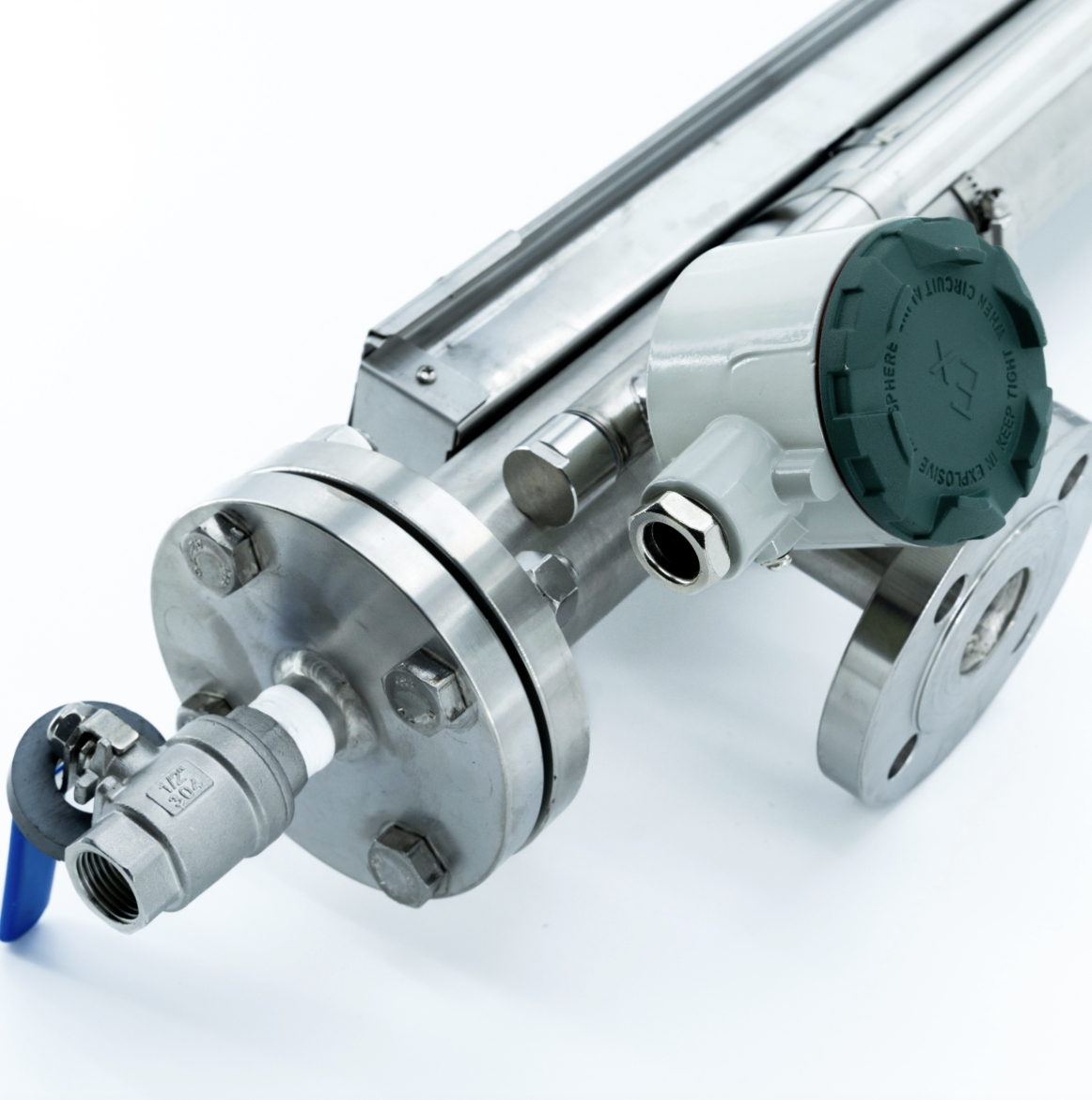
The measurement principle relies on hydrostatic balance between the tank and the external bypass chamber. When both vessels are connected through upper and lower nozzles, the liquid levels naturally equalize according to fluid statics. The float is engineered with a density lower than the process liquid, allowing stable buoyancy across the operating range. Float dimensions and magnetic strength are selected according to liquid density, temperature, and pressure conditions. Proper chamber diameter and smooth internal surfaces also reduce friction, ensuring the float moves freely and reflects real process level changes accurately.
Magnetic coupling ensures safe, non-contact liquid level visualization. Visual indicators translate float motion into high-contrast readings suitable for long-distance monitoring, even in extreme industrial environments.
| Feature | Application | Technical Parameters | Operational Notes | Industry Guidance |
|---|---|---|---|---|
| Magnetic Coupling | Transmit float movement to external indicator | Magnetic field strength: 300–600 mT; distance through chamber wall: 10–50 mm | Ensure proper alignment of float and external flags | Maintain minimum clearance to prevent signal loss |
| Permanent Float Magnets | Actuate external flags or rollers | Material: NdFeB or AlNiCo; operating temperature: -40°C to 200°C | Select magnet grade based on process temperature | Stronger magnets recommended for high-viscosity liquids |
| Rotating Flags / Rollers | Visual display of liquid level | Rotation angle: 180°; color contrast: red/white or yellow/black; flag height: 20–40 mm | Inspect periodically for debris or mechanical damage | Use UV-resistant coatings for outdoor tanks |
| Chamber Isolation | Prevent fluid contact with external indicators | Sealed metallic or polymer chamber; pressure rating: up to 2 MPa; temperature rating: up to 400°C | Check sealing gaskets for wear during routine maintenance | Critical for chemical, petrochemical, and pharmaceutical applications |
| Scale Visibility | Long-distance monitoring | Reading distance: 5–20 m; scale spacing: 10–20 mm | Ensure installation height matches operator line-of-sight | Combine with transmitter output for remote monitoring |
| Durability & Reliability | Continuous operation in harsh environments | Corrosion-resistant alloys (316L SS, PVDF), wear-resistant rollers | Avoid magnetic interference from nearby equipment | Regular cleaning recommended to maintain flag rotation |
Tip:Ensure chamber walls are free from metallic obstructions and maintain proper magnet alignment. This maximizes signal strength, prevents misreading, and ensures accurate, long-term visual level indication.
Advanced magnetic level indicators often incorporate position sensors along the bypass chamber to provide continuous electronic output. Technologies such as magnetostrictive sensing detect the exact position of the float magnet along a measurement rod with high precision. The resulting signal can be converted into standard industrial outputs like 4–20 mA for integration with control systems. These transmitters enable data logging, remote alarms, and automated process adjustments. Combining visual indication with electronic transmission creates a redundant monitoring approach that improves reliability and enhances process safety in critical industrial applications.
Industrial tanks often hold hazardous substances. These may include acids, solvents, or hydrocarbons. A magnetic Tank Level Indicator protects operators by isolating the fluid within a sealed chamber. The float remains inside the chamber, while the indicator stays outside. This structure prevents leaks and contamination. It also protects the monitoring mechanism from direct chemical exposure. Plants working with aggressive media benefit from this sealed design. It keeps the monitoring process both safe and stable.
Magnetic level indicators are designed to remain readable in demanding plant environments where lighting conditions, distance, or equipment layout may limit visibility. Many systems use UV-resistant color flags, typically red and white or yellow and black, which rotate 180° to indicate liquid position clearly. Indicator scales are often protected by tempered glass or polycarbonate covers to resist dust, moisture, and mechanical impact. In large industrial tanks, scale markings may be spaced to match common level increments, enabling operators to estimate tank volume quickly during routine inspections.
Magnetic level indicators used in severe service are engineered to tolerate significant mechanical and thermal stress. Bypass chambers are commonly fabricated from pressure-rated stainless steel pipes or forged chambers designed according to industrial standards such as ASME pressure vessel guidelines. Depending on design and material grade, systems may operate in environments exceeding 200 °C and several MPa of pressure. Welded construction, corrosion-resistant alloys, and sealed magnetic coupling help maintain structural integrity and measurement stability even under continuous industrial operation.
Chemical and petrochemical facilities frequently operate under high pressure, elevated temperatures, and corrosive media conditions. Magnetic level indicators are commonly installed on reactors, acid storage tanks, and separation vessels because their sealed chambers isolate the process fluid from external components. Materials such as stainless steel 316L, titanium, or corrosion-resistant alloys are often selected to withstand aggressive chemicals. In many plants, these indicators are combined with transmitters and alarm switches to provide continuous level feedback to the control system, supporting stable reaction conditions and preventing overflow or unsafe pressure buildup.
In oil and gas operations, tanks and separators handle flammable hydrocarbons and volatile mixtures that require safe, leak-free level monitoring. Magnetic level indicators are valued for their closed measurement design, which minimizes vapor release and exposure to hazardous fluids. They are frequently installed on crude storage tanks, condensate vessels, and three-phase separators. When paired with transmitters, the system can send continuous level data to pipeline control centers or field automation systems. This real-time monitoring helps operators maintain stable flow rates and detect abnormal level changes during production or transport.
Power plants rely on accurate level monitoring in boiler drums, condensate tanks, and feedwater systems to maintain stable steam generation. Magnetic level indicators provide clear visual confirmation of water levels even under high temperature and pressure conditions. In water treatment plants, they help monitor sedimentation tanks, chemical dosing tanks, and filtration systems to maintain treatment efficiency. Pharmaceutical facilities require hygienic equipment design, often using polished stainless steel surfaces and sealed chambers. This construction prevents contamination while allowing operators to monitor critical process liquids with reliable and consistent readings.
Modern systems use advanced sensing technology. Magnetostrictive sensors detect the exact position of the magnetic float. The sensor sends a pulse along a wire inside the transmitter. When the pulse meets the float magnet, it returns a signal. The system measures this signal to determine the liquid level. The result is high-resolution measurement. Engineers receive precise data for process control. This technology strengthens the role of the Tank Level Indicator in modern automation systems.
The 4–20 mA current loop is widely used in industrial instrumentation because it provides stable signal transmission over long distances and strong resistance to electrical noise. In level monitoring systems, transmitters convert float position into proportional current signals that can travel hundreds of meters without significant loss. Digital protocols such as HART or Modbus may be integrated to transmit diagnostic data alongside the analog signal. Proper grounding, shielded cables, and calibration routines help maintain signal accuracy and ensure reliable communication between field instruments and control systems.
Modern industrial facilities increasingly connect level monitoring devices to distributed control systems (DCS) and supervisory control and data acquisition (SCADA) platforms. Through these networks, tank level data can be logged continuously, enabling engineers to analyze historical trends and identify abnormal fluctuations. Integration with automation software also supports predictive maintenance by detecting irregular signal patterns or sensor drift. When combined with alarm management systems, automated monitoring allows faster response to process deviations, helping maintain stable operations and reducing the risk of equipment damage or production interruptions.
Material selection directly affects durability and measurement reliability. Stainless steel grades such as 304 and 316L are widely used for general industrial service, with 316L preferred for chloride-containing or sanitary processes due to its improved corrosion resistance and cleanability. PVDF offers strong resistance to acids, solvents, and oxidizing chemicals, making it suitable for aggressive chemical storage. Polypropylene is commonly applied in moderate-temperature chemical environments because of its chemical stability and lower cost. Selecting materials compatible with process temperature, pressure, and media composition helps prevent corrosion, scaling, and premature component failure.
Magnetic level indicators are typically designed according to tank geometry and operating conditions. Engineers calculate the measuring length based on nozzle spacing and maximum liquid height to ensure the float travels across the full process range. For tall storage tanks, modular chamber sections allow construction of indicators exceeding several meters while maintaining structural stability. Proper float sizing must also match the liquid density to maintain buoyancy. Correct configuration improves response accuracy and prevents float sticking, ensuring the indicator reflects real tank conditions across the entire operating range.
Alarm switches expand the role of a magnetic level indicator from observation to active process control. Adjustable magnetic reed switches or proximity switches can be mounted along the indicator column to trigger alarms at predefined levels. These switches may start or stop pumps, activate warning lights, or send signals to control systems. In automated plants, combining multiple switches enables staged control such as low-level protection, normal operating range monitoring, and high-level shutdown. Proper calibration of switching points ensures reliable response and helps prevent overflow, pump cavitation, or dry-running equipment.
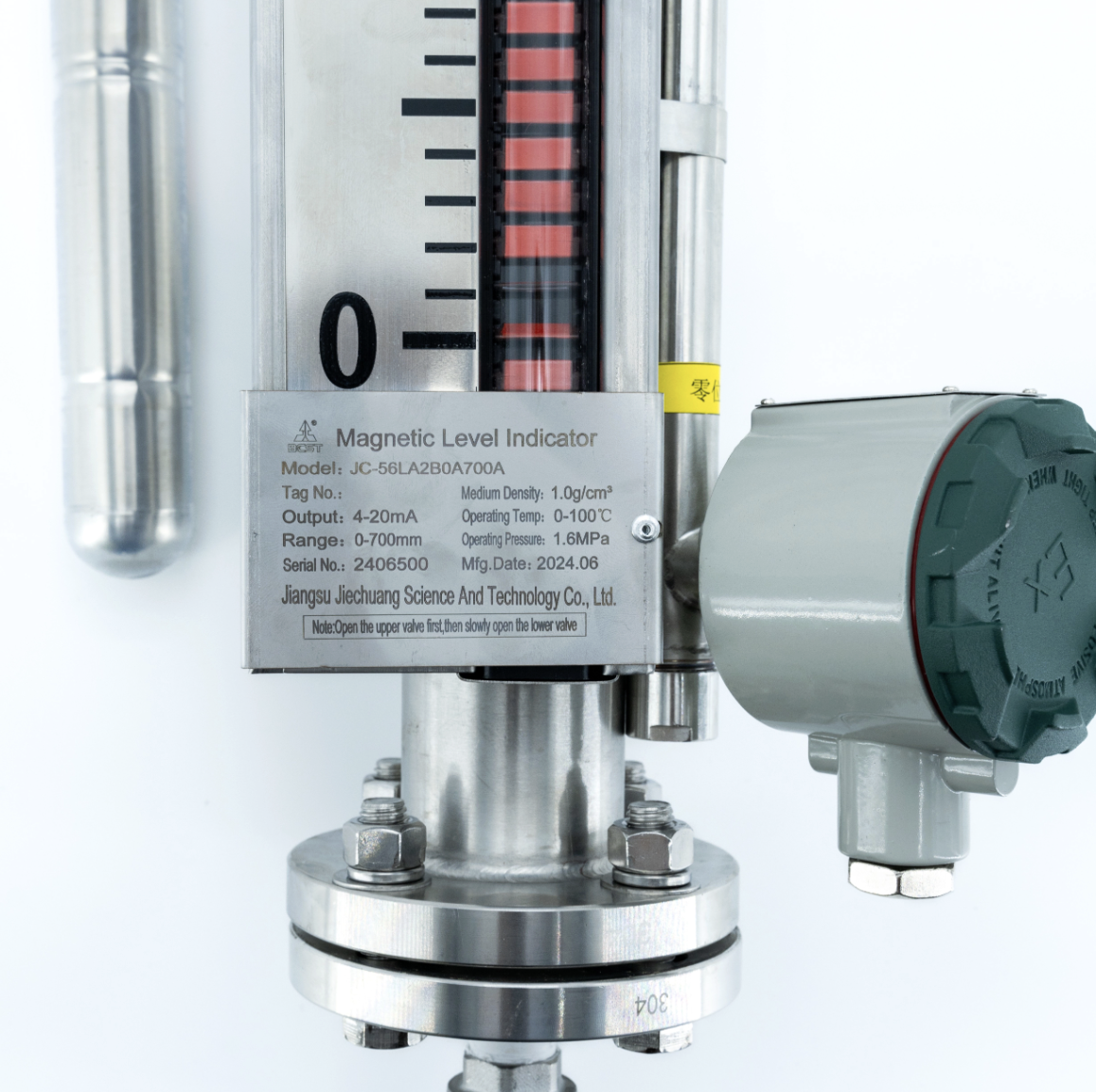
Each industrial tank has unique operating conditions. Engineers must consider pressure, temperature, and fluid density. A properly selected Tank Level Indicator ensures accurate monitoring under these conditions. The float must match the liquid’s density. The chamber material must resist the process fluid. When these factors align, the indicator performs reliably. Careful selection supports long-term operational stability.
Correct installation plays a key role in measurement accuracy. Magnetic indicators must mount vertically along the tank. This orientation allows the float to move freely with the liquid level. Technicians should also ensure proper alignment with the tank connections. Clean installation prevents debris from entering the chamber. When installed correctly, the indicator delivers stable and accurate readings.
In complex industrial facilities, level monitoring does not rely on a single device alone. A Tank Level Indicator works best when integrated with visual inspection routines, electronic signals, and plant control systems. The following structured overview highlights practical monitoring elements, technical parameters, and operational considerations commonly used in industrial installations.
| Monitoring Element | Typical Application | Key Technical Parameters | Operational Notes | Industry Reference Range |
|---|---|---|---|---|
| Visual Magnetic Indicator (Flag/Roller Display) | Direct tank level observation during routine inspection | Indicator resolution typically aligned with float movement; readable from 5–20 m depending on scale size | Ensure scale visibility and correct vertical alignment during installation | Scale height markings commonly spaced at 10–20 mm intervals |
| Magnetic Float Assembly | Core level sensing component inside bypass chamber | Float buoyancy designed for liquid density ranges typically ≥0.45 g/cm³ | Float material selected according to process media (e.g., stainless steel, titanium) | Operating temperature commonly up to 200–400 °C depending on design |
| Bypass Chamber Level Equalization | Ensures chamber level equals tank level | Chamber connected via upper and lower flanges; vertical installation required | Maintain proper centerline alignment with tank nozzles | Typical chamber diameters 50–75 mm (2–3 in) |
| Level Transmitter Integration | Remote monitoring in control rooms | Analog output 4–20 mA, optional digital protocols (HART, Modbus) | Connect to PLC or DCS for real-time level visualization | Signal accuracy typically ±1–10 mm depending on sensor type |
| Magnetostrictive Level Sensor | High-precision level measurement for process control | Measurement resolution as fine as 1 mm | Suitable for applications requiring continuous data logging | Typical measurement ranges up to 5–10 m depending on model |
| Alarm Switch Modules | Automatic control of pumps, valves, or alarms | Magnetic reed switches triggered at preset levels | Installed externally; position adjustable along indicator scale | Switching current typically 0.5–1 A at 230 VAC (varies by manufacturer) |
| Routine Inspection Schedule | Plant operational safety checks | Visual inspection intervals often daily or weekly depending on plant policy | Confirm scale visibility, flag rotation, and signal output | Maintenance cleaning interval commonly 6–12 months |
| Control System Integration | Central monitoring through DCS/SCADA | Data transmitted via industrial signal loops | Enables trend analysis and automated alerts | Control system sampling intervals typically 1–5 seconds |
Tip:For critical storage tanks, combine a visual magnetic indicator with a transmitter output. This dual-layer monitoring method allows operators to verify levels locally while control systems track real-time data remotely.
Precise liquid level monitoring is vital. Tanks hold hazardous fluids. Magnetic Tank Level Indicators show levels safely. Sealed chambers and magnetic coupling protect operators. High-visibility displays allow quick checks. Advanced sensors enable real-time monitoring. Jiangsu Jiechuang Science And Technology Co., Ltd. provides durable, reliable indicators. Their products enhance industrial safety and improve process efficiency. Industries like chemical, oil, power, and water benefit from these solutions.
A: A Tank Level Indicator shows fluid levels in tanks safely and accurately.
A: It uses sealed chambers and magnetic coupling to prevent fluid exposure.
A: Accurate readings prevent overflows, equipment damage, and production downtime.
A: Yes, integrated sensors allow real-time data via 4–20 mA or digital signals.
A: They are non-intrusive, durable, high-visibility, and ideal for hazardous fluids.
A: Regular inspection, cleaning of floats and flags, and checking sensor alignment ensures accuracy.


