Introduction
Level measurement failures can stop production and create safety risks. Tanks often contain vapor, foam, or turbulence that confuse many sensors. A Guided Wave Radar Level Transmitter solves this problem with guided microwave signals along a probe. This method keeps readings stable in harsh conditions. In this article, you will learn how it works and why industries trust it for reliable measurement.
How a Guided Wave Radar Level Transmitter Works in Industrial Level Measurement
Time Domain Reflectometry (TDR) and Guided Microwave Signal Technology
A Guided Wave Radar Level Transmitter operates using Time Domain Reflectometry (TDR). The transmitter sends short microwave pulses down a metal probe placed inside the vessel. These pulses travel along the probe until they reach the material surface. When the signal encounters the liquid or solid, part of the energy reflects back to the transmitter. The device measures the time it takes for the signal to return. Since microwave signals travel at a constant speed, the transmitter can calculate the distance between the probe and the product surface. This distance converts into an accurate level reading. Because the signal travels along a defined path, the measurement remains stable even when the tank environment changes.
Probe-Guided Signal Transmission for Stable Measurement
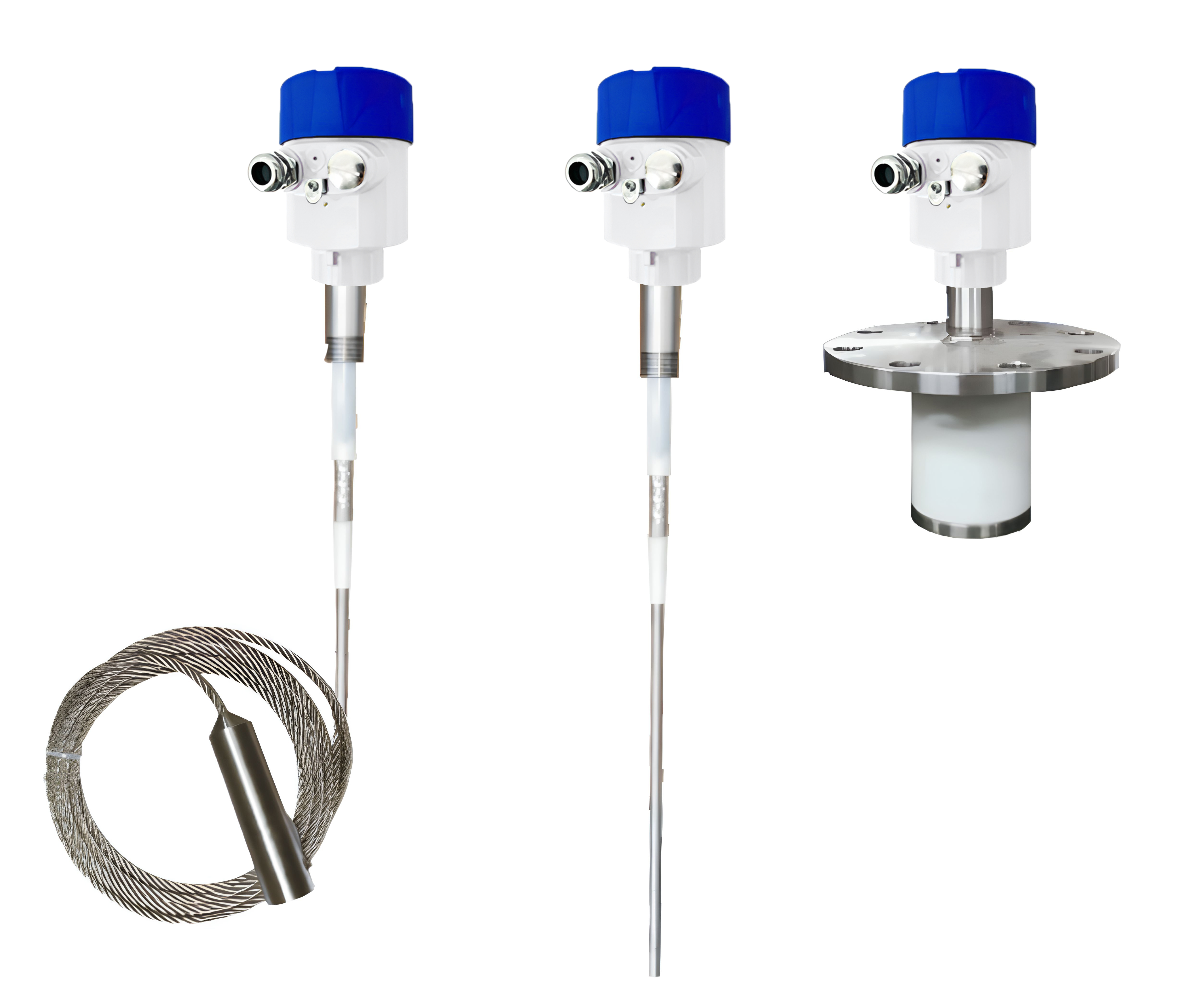
The probe plays a central role in the performance of a Guided Wave Radar Level Transmitter. It acts as a waveguide that directs microwave energy directly toward the measured material. Rod probes, flexible cables, and coaxial probes are commonly used depending on the tank design. Guided transmission ensures that the signal stays concentrated along the probe rather than spreading into the tank atmosphere. This focused signal path improves echo quality and maintains strong reflections from the product surface. As a result, the transmitter produces consistent readings even when the tank contains vapor, foam, or internal structures.
Why Guided Signal Paths Deliver More Reliable Measurements
Guided wave radar improves measurement stability because the radar pulse travels along a physical probe rather than dispersing through the tank atmosphere. This structure reduces signal loss and interference caused by vapor, dust, or tank internals. The technical factors below explain why guided signal transmission produces reliable industrial measurements.
| Technical Aspect | Engineering Explanation | Typical Parameters / Data | Industrial Application | Installation Considerations |
| Guided Signal Propagation | Radar pulse travels along a metallic probe acting as a waveguide, preventing signal dispersion in open air | Microwave propagation speed ≈ 3 × 10⁸ m/s | Chemical reactors, storage tanks, bypass chambers | Ensure probe is centered to prevent wall contact in narrow tanks |
| Echo Detection Principle | Signal reflects when encountering dielectric change between vapor and liquid surface | Detectable dielectric constant typically ≥1.4 | Petroleum products, solvents, hydrocarbons | Select coaxial probes when dielectric constant is low |
| Resistance to Vapor and Gas Interference | Radar signal guided along probe minimizes attenuation from vapor layers | Operating temperature range typically −40 °C to +200 °C (some models higher) | Steam tanks, condensate vessels, chemical reactors | Install transmitter above vapor zone when possible |
| Foam Penetration Capability | Foam behaves similarly to air for microwave signals, allowing radar pulse to reach liquid surface | Effective even with moderate foam thickness up to several centimeters | Aeration tanks, fermentation vessels, wastewater systems | Single rod probes often perform best in foamy media |
| Immunity to Tank Geometry | Guided path reduces false echoes from tank walls or internal structures | Measurement accuracy typically ±2 mm | Tanks with agitators, heating coils, or ladders | Position probe away from rotating mixers |
| Measurement Range Stability | Guided radar maintains signal strength over long probes | Typical measurement range up to 30 m depending on probe type | Large storage tanks and tall process vessels | Flexible cable probes recommended for deep tanks |
| Signal Processing and Echo Mapping | Advanced algorithms filter fixed echoes from nozzles, weld seams, and supports | Response time typically <1 s with continuous output | Automated process control systems | Perform echo mapping during commissioning for optimal performance |
Tip:For best measurement stability, guided radar probes should be installed vertically and clear of obstructions. Maintaining at least 50–100 mm clearance from tank walls helps prevent secondary reflections and ensures consistent signal return from the product surface.
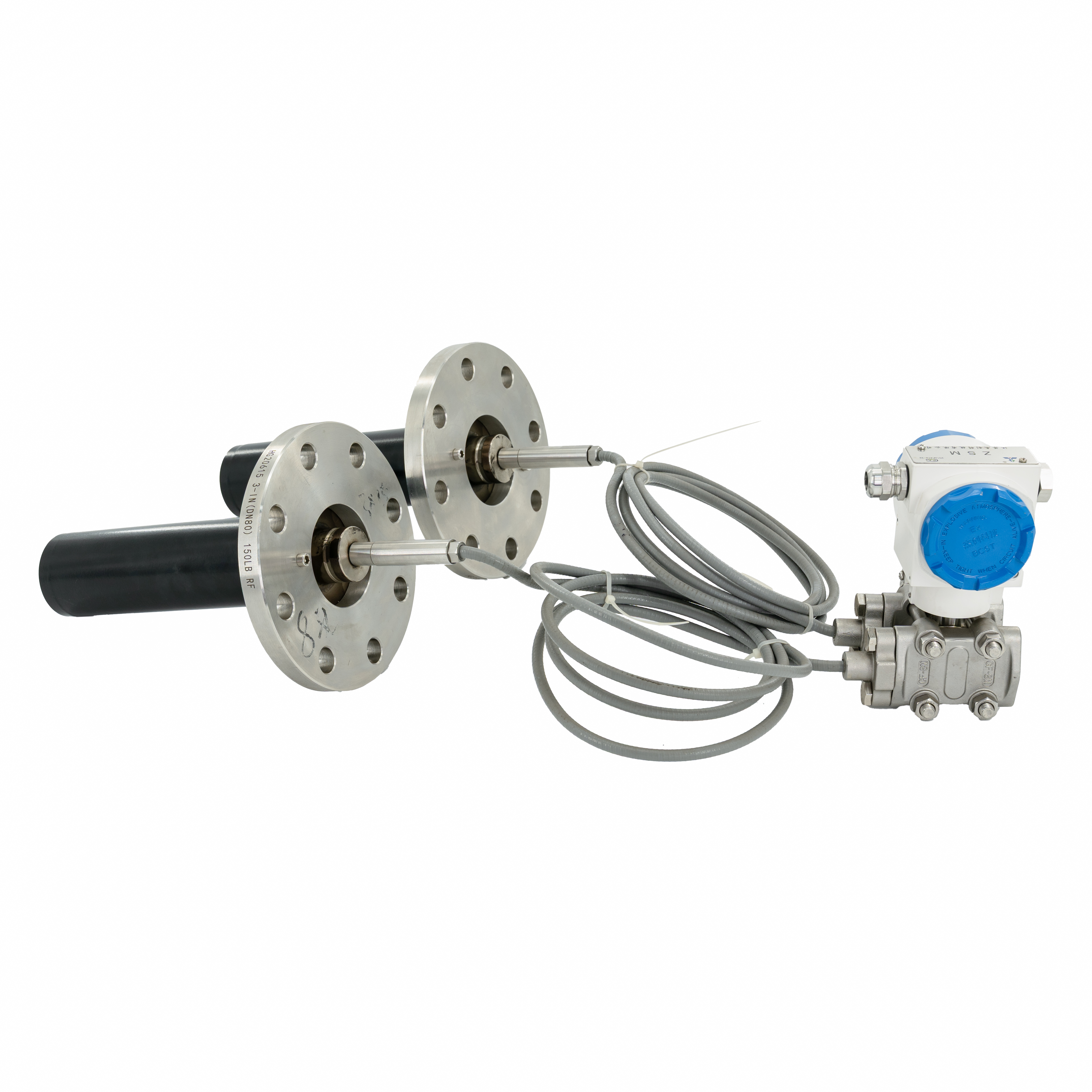
Why Guided Wave Radar Level Transmitters Excel in Complex Industrial Environments
Reliable Measurement in Vapor, Steam, and Foam
Many industrial tanks contain vapor layers, foam formation, or process gases. These conditions can scatter or absorb signals from traditional sensors. A Guided Wave Radar Level Transmitter avoids this issue because its signal travels directly along the probe. Microwave pulses remain focused until they reach the product surface. Foam layers behave similarly to air spaces for radar signals, allowing the pulse to pass through and reach the liquid beneath. This ability ensures stable level readings in chemical reactors, oil storage tanks, and wastewater vessels where foam frequently forms.
Performance Stability Under Extreme Temperature and Pressure
Industrial processes often operate under demanding thermal and pressure conditions. Storage tanks may reach high temperatures, while pressurized reactors can create challenging measurement environments. A Guided Wave Radar Level Transmitter maintains consistent performance across these conditions. The microwave signal remains stable regardless of pressure changes inside the vessel. Modern transmitters also use robust electronics and industrial-grade probes designed for harsh environments. Because the measurement principle depends on signal travel time rather than physical properties, temperature variations rarely affect accuracy.
Accurate Measurement for Low-Dielectric Liquids
Certain liquids reflect radar signals weakly due to low dielectric constants. Examples include petroleum products, liquefied gases, and chemical solvents. Many measurement technologies struggle to detect these materials consistently. A Guided Wave Radar Level Transmitter handles low-dielectric liquids effectively because the signal travels along the probe. The guided signal path increases reflection strength and improves detection accuracy. This capability allows operators to measure challenging products with confidence while maintaining tight inventory control.
Measurement Accuracy and Process Control Advantages
High-Precision Level Monitoring for Critical Processes
Industrial facilities rely on precise level measurement to maintain safe and efficient operations. Even small measurement deviations can affect product quality or production stability. A Guided Wave Radar Level Transmitter provides high precision, often achieving accuracy within a few millimeters. This level of accuracy allows engineers to monitor tank levels in real time and maintain tighter process control. Stable measurements help prevent overfilling, optimize material usage, and ensure consistent product quality. In automated plants, accurate level data also supports advanced control systems and predictive monitoring.
Focused Radar Signals That Avoid False Echoes
Industrial tanks often contain internal equipment such as mixers, heating coils, ladders, or baffles. These structures can generate false echoes for many level sensors. A Guided Wave Radar Level Transmitter reduces this problem through its probe-guided signal path. Since the radar pulse travels along the probe, the transmitter can clearly identify reflections from the product surface. Interference from surrounding structures becomes easier to filter. This focused signal behavior significantly improves measurement reliability in vessels with complex internal layouts.
Consistent Performance in Narrow or Obstructed Tanks
Tall and narrow vessels create measurement difficulties for many sensors. Limited space and internal obstacles often disrupt signal propagation. The Guided Wave Radar Level Transmitter handles these conditions effectively because the probe provides a direct signal path. The guided signal maintains strong reflections even when the tank diameter is small. This capability allows reliable measurement in bypass chambers, reactors, and vertical storage tanks. Engineers often select guided radar for installations where other technologies struggle to maintain stable readings.
Versatile Measurement Capabilities of a Guided Wave Radar Level Transmitter
Simultaneous Level and Interface Measurement
In separation tanks and settling vessels, accurate detection of the interface between two liquids is critical for maintaining process efficiency. A Guided Wave Radar Level Transmitter measures both the total level and the interface when the liquids have sufficiently different dielectric constants. For example, oil typically has a dielectric constant around 2–4, while water is about 80, producing clear reflection signals for interface detection. Advanced transmitters analyze multiple echoes along the probe to identify both boundaries. This capability supports precise control in oil-water separators, desalters, and chemical decanting systems, helping operators maintain product purity and optimize separation efficiency.
Adaptability to Different Tank Designs and Process Media
Industrial tanks vary widely in geometry, ranging from narrow bypass chambers to large storage vessels exceeding 20–30 m in height. A Guided Wave Radar Level Transmitter adapts well to these variations because the guided signal travels along the probe rather than through the tank atmosphere. This design minimizes interference from tank walls, internal ladders, heating coils, or mixers. Engineers can install the transmitter through top-mounted nozzles, bypass chambers, or stilling wells, depending on process requirements. This flexibility makes guided radar suitable for industries including chemical processing, petroleum storage, pharmaceuticals, and food production.
Probe Options for Different Industrial Applications
Selecting the correct probe type ensures optimal radar performance in different process conditions. Rigid rod probes are commonly used in tanks up to 6 m deep where mechanical stability is important. Flexible cable probes support deeper vessels and can measure levels up to 30 m or more, making them suitable for large storage tanks and silos. Coaxial probes provide the strongest signal performance and are often used when measuring liquids with low dielectric constants near 1.4–2.0. Engineers also consider probe material, such as 316L stainless steel or coated probes, to ensure compatibility with corrosive or hygienic process media.
Operational Efficiency and Maintenance Benefits
Solid-State Design With No Moving Parts
Mechanical level devices often rely on floats, displacers, or moving components. These parts may wear over time and require regular service. A Guided Wave Radar Level Transmitter uses a solid-state design with no moving parts. This design greatly reduces mechanical wear and maintenance needs. Because the transmitter relies on electromagnetic signals rather than mechanical motion, measurement accuracy remains stable throughout the device’s lifespan. Facilities benefit from lower maintenance costs and improved operational reliability.
Reliable Measurement Despite Coating or Condensation
In many industrial processes, media such as resins, syrups, polymers, or sludge can create buildup on instrument surfaces. Condensation may also form when tanks operate with temperature gradients or vapor-rich atmospheres. A Guided Wave Radar Level Transmitter maintains measurement stability because radar pulses travel along the probe and analyze reflection patterns using advanced echo-processing algorithms. These algorithms distinguish between coating signals and the true liquid surface. Many devices also support automatic echo mapping and signal filtering, allowing accurate readings even when thin deposits form. Proper probe selection, such as single rod probes for viscous materials, further improves long-term measurement reliability.
Safer Operation Through Remote Electronics and Automation Integration
Industrial plants increasingly rely on digital monitoring to reduce manual inspection and improve safety. A Guided Wave Radar Level Transmitter supports remote electronics configurations where the transmitter head can be installed away from high-temperature or hazardous zones. Measurement data is transmitted through 4–20 mA signals, HART, Modbus, or industrial fieldbus networks, allowing integration with DCS and SCADA systems. Operators can monitor tank levels, alarms, and diagnostics in real time from control rooms. Advanced transmitters also support predictive diagnostics and remote configuration, enabling faster troubleshooting while minimizing the need for personnel to access elevated or confined tank locations.
Industrial Applications Where Guided Wave Radar Level Transmitters Are the Standard
Oil and Gas Storage and Processing Tanks
In oil and gas facilities, storage tanks often handle hydrocarbons such as crude oil, gasoline, LPG, and condensates. These liquids typically have low dielectric constants, usually between 1.8 and 4.0, which can reduce signal reflection for many level technologies. A Guided Wave Radar Level Transmitter improves measurement reliability because the radar pulse travels directly along the probe and returns a clear reflection from the liquid surface. Modern systems achieve measurement accuracy around ±2 mm and operate in tanks up to 30 m measurement range. Many installations also support API overfill protection systems and integrate with SCADA platforms through 4–20 mA or HART communication, enabling continuous inventory monitoring and safer terminal operations.
Chemical Processing and High-Pressure Reactors
Chemical processing vessels often involve aggressive media, rapid temperature changes, and internal mixing equipment. Reactors may operate at temperatures up to 200–400 °C and pressures exceeding 40 bar, requiring measurement devices that remain stable under these conditions. A Guided Wave Radar Level Transmitter provides reliable level detection because the guided signal path is unaffected by vapor density, pressure variations, or agitation created by mixers. Engineers frequently select coaxial or rigid rod probes in reactors to maintain strong signal returns and avoid interference from internal components. Accurate level monitoring supports reaction control, improves batch consistency, and enhances process safety in automated chemical production systems.
Water, Wastewater, and Industrial Treatment Systems
In water and wastewater treatment facilities, tanks often contain aeration bubbles, foam layers, sludge mixtures, and suspended solids. Level instruments must operate reliably despite turbulence and changing media composition. The following table summarizes how a Guided Wave Radar Level Transmitter performs in typical treatment units, along with practical engineering considerations and commonly reported operating parameters.
| Application Unit | Typical Process Conditions | Recommended Probe Type | Typical Measurement Range | Key Performance Characteristics | Engineering Considerations | Relevant Technical Indicators |
| Aeration Tanks | Heavy aeration bubbles, foam layers, biological sludge, continuous mixing | Single rod probe or coaxial probe | 0–6 m typical tank depth | Stable signal through foam and aeration; minimal signal loss due to guided path | Install away from air diffusers if possible; ensure probe length covers operating range | Accuracy typically ±2 mm; operating temperature −40 to +200 °C; pressure up to 40 bar |
| Clarifiers / Sedimentation Tanks | Slow-moving sludge layer, suspended solids, occasional surface scum | Flexible cable probe | 0–10 m typical basin depth | Reliable surface detection despite suspended particles | Avoid probe contact with scraper arms; maintain adequate clearance from tank walls | Dielectric detection typically ≥1.4; resolution approx. 1–2 mm |
| Sludge Storage Tanks | High-viscosity sludge, potential coating buildup, slow agitation | Single rigid rod probe | 0–8 m typical sludge storage height | Radar signal remains detectable even with probe coating | Select corrosion-resistant probe material (e.g., stainless steel 316L) | Operating temperature up to 200 °C; IP67–IP68 electronics housing |
| Equalization Basins | Variable flow, turbulence, fluctuating liquid levels | Flexible cable probe | Up to 15–20 m depending on basin design | Stable measurement under fluctuating levels | Ensure probe centering to prevent contact with tank walls in tall basins | Measurement repeatability typically ±1 mm |
| Chemical Dosing Tanks | Corrosive chemicals, stable surface conditions, smaller tank sizes | Coaxial probe or rigid rod probe | 0–3 m typical dosing tank height | High signal strength even for low dielectric liquids | Confirm chemical compatibility of probe materials | Minimum dielectric constant approx. 1.4 |
| Pump Stations / Wet Wells | Turbulent inflow, floating debris, rapid level changes | Flexible cable probe | 0–10 m depending on station depth | Rapid response to changing levels; accurate echo detection | Mount transmitter above turbulence zone if possible | Response time typically <1 s; output signal 4–20 mA with HART |
Tip:When installing a Guided Wave Radar Level Transmitter in wastewater environments, selecting the correct probe type is critical. Flexible cable probes perform well in deep basins, while coaxial probes provide stronger signals in small chemical tanks with low dielectric liquids.
Conclusion
Modern plants require reliable level measurement in harsh tanks. Vapor, foam, turbulence, and temperature shifts often disrupt traditional sensors. A Guided Wave Radar Level Transmitter solves this with probe-guided microwave signals that deliver stable, precise readings. It supports automation, improves process safety, and reduces maintenance needs. Jiangsu Jiechuang Science And Technology Co., Ltd. provides advanced transmitters designed for demanding industries, helping plants achieve accurate monitoring, dependable operation, and long-term process efficiency.
FAQ
Q: What is a Guided Wave Radar Level Transmitter?
A: A Guided Wave Radar Level Transmitter measures tank level using microwave pulses guided along a probe for stable readings.
Q: Why is a Guided Wave Radar Level Transmitter reliable in complex tanks?
A: A Guided Wave Radar Level Transmitter uses a probe-guided signal, reducing interference from vapor, foam, or tank internals.
Q: Where is a Guided Wave Radar Level Transmitter commonly used?
A: A Guided Wave Radar Level Transmitter is widely used in oil tanks, chemical reactors, and wastewater treatment systems.
Q: How accurate is a Guided Wave Radar Level Transmitter?
A: Most Guided Wave Radar Level Transmitter devices provide accuracy around ±2 mm for precise process control.


