
Views: 21 Author: Site Editor Publish Time: 2026-01-04 Origin: Site


V-Cone Flow Meters are a crucial technology in water treatment plants, providing accurate and reliable flow measurement for various water treatment processes. These meters work by creating a differential pressure across a cone inserted into the flow path, where the pressure drop is directly related to the flow rate. One of the key features of V-Cone meters is their ability to measure flow with high accuracy in fluctuating conditions, such as varying pressure, temperature, or flow rates. Additionally, they offer minimal pressure loss, making them energy-efficient, and are low-maintenance, ensuring long-term reliability in demanding environments. The purpose of this article is to explore the applications and benefits of using V-Cone Flow Meters in water treatment processes, highlighting their effectiveness in both clean water systems and wastewater treatment.
V-Cone Flow Meters are ideal for providing accurate flow measurements in clean water systems, including drinking water distribution. Their high precision ensures that water treatment plants can closely monitor and control water flow, maintaining both operational efficiency and regulatory compliance. V-Cone meters can handle varying flow rates with minimal pressure loss, making them suitable for both large-scale systems and more precise applications in water treatment facilities.
In sludge and wastewater treatment, V-Cone meters excel at measuring flow in slurries, sludges, and other non-ideal fluids. These types of fluids, which often contain solid particles or varying viscosities, can be challenging for conventional flow meters. V-Cone meters are able to handle these complex mixtures effectively, providing reliable measurements without the risk of clogging or significant pressure drop. Their robustness ensures accurate flow data in wastewater treatment processes, which is critical for operational efficiency and environmental compliance.
V-Cone meters are widely used in chemical dosing systems in water treatment plants. These systems inject chemicals like coagulants, disinfectants, or pH adjusters into water to ensure safe drinking water and efficient treatment. V-Cone meters ensure precise flow measurement of these chemicals, allowing plant operators to monitor chemical dosing rates accurately, preventing overuse or underuse, and ensuring that chemicals are dosed optimally for water treatment effectiveness.
Pump stations in water treatment plants require accurate flow monitoring to ensure that pumps operate efficiently and effectively. V-Cone meters are well-suited for this task, providing reliable flow measurements even in fluctuating conditions. By offering accurate data on flow rates, V-Cone meters help optimize pump performance, reduce energy consumption, and improve the overall efficiency of water distribution and wastewater treatment processes. Their minimal pressure loss and low maintenance needs also contribute to the reliability of pump station operations.
V-Cone Flow Meters are renowned for their high accuracy, even in fluctuating flow rates, pressure changes, and temperature variations. In water treatment plants, conditions can change rapidly, such as varying water pressure and flow rate fluctuations. V-Cone meters maintain precise measurements in these dynamic conditions, ensuring that operators can rely on consistent data for better process control and efficiency.
One of the key benefits of V-Cone Flow Meters is their ability to offer minimal pressure loss. Traditional flow measurement technologies like orifice plates often cause significant pressure drops, leading to higher energy consumption. V-Cone meters, with their streamlined design, help reduce energy costs by maintaining a low-pressure drop while still providing highly accurate flow measurements. This makes them particularly suitable for energy-efficient operations in water treatment plants, helping to reduce operational costs.
V-Cone meters are designed for low maintenance requirements, making them ideal for use in harsh environments like wastewater treatment plants. These meters have no moving parts, reducing the likelihood of wear and tear. Additionally, their robust construction allows them to perform reliably even in challenging conditions such as slurries, sludge, and abrasive fluids. This durability leads to fewer maintenance interventions, minimizing downtime and reducing the overall maintenance burden on plant operators.
The long-term reliability of V-Cone Flow Meters ensures consistent performance in critical applications. In water treatment plants, reliable flow measurement is essential for maintaining system efficiency and regulatory compliance. V-Cone meters provide dependable data over extended periods, reducing the risk of unexpected downtime and maintenance costs. Their robust design also contributes to their reliability in high-pressure, high-temperature, or corrosive environments, making them an excellent choice for both clean water and wastewater treatment applications.
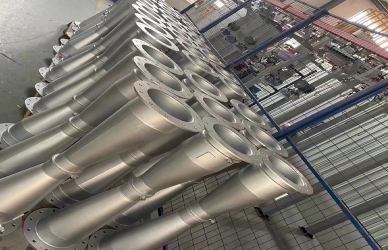
Proper pipe size is essential when installing V-Cone Flow Meters to ensure accurate flow measurements. The meter must match the pipe diameter to ensure optimal performance. Additionally, the orientation of the meter plays a crucial role in ensuring reliable operation. Typically, V-Cone meters are best installed in a horizontal position to avoid interference from gravity or material accumulation, unless specified otherwise by the manufacturer. Correct orientation ensures consistent flow readings and minimizes measurement errors.
To achieve accurate flow measurements, V-Cone Flow Meters require adequate straight pipe lengths both upstream and downstream of the meter. This minimizes the impact of flow disturbances caused by bends, fittings, or other obstructions in the pipe. Generally, it’s recommended to have at least 10-20 pipe diameters of straight pipe upstream and 5-10 pipe diameters downstream to allow for stable, undisturbed flow. Ensuring these requirements will help the V-Cone meter function optimally and provide accurate, reliable measurements.
V-Cone Flow Meters are designed for easy integration with existing water treatment plant infrastructure. Their compact and versatile design allows them to be installed in both new and existing systems without major modifications. Whether it's for clean water, wastewater, or chemical dosing systems, V-Cone meters can be incorporated seamlessly into the plant's piping and control systems. This flexibility ensures minimal disruption during installation and allows for continuous, real-time flow monitoring across various water treatment processes.
Accurate calibration is essential when installing a V-Cone Flow Meter to ensure it delivers precise flow measurements. Calibration should be conducted according to manufacturer guidelines, especially if the meter is installed in new or modified systems. Proper calibration ensures that the flow readings remain accurate and reliable, even with variations in fluid characteristics, temperature, or pressure. Regular checks and recalibration should also be planned to maintain accuracy over time.
Yes, V-Cone Flow Meters are highly versatile and can accurately measure both clean water and non-ideal wastewater flows. They are designed to handle liquids, gases, and slurries, making them ideal for wastewater treatment plants, where the flow can contain solids, debris, or varying viscosities. Their ability to maintain accuracy in challenging fluid conditions, such as fluctuating flow rates and pressures, makes them a reliable choice for both clean water systems and wastewater treatment applications.
V-Cone Flow Meters offer minimal pressure loss compared to traditional flow measurement devices like orifice plates or turbine meters, which typically cause higher pressure drops. By minimizing pressure loss, V-Cone meters reduce the energy required to pump fluids through the system. This leads to lower energy consumption in water treatment plants, resulting in cost savings and more energy-efficient operations. The reduced pressure loss also helps to maintain optimal system performance and prevent unnecessary wear on pumps and equipment.
V-Cone Flow Meters are effective at measuring a wide range of flow rates, including very low flow conditions. Their design ensures high accuracy even at low flow rates, making them suitable for systems with low flow needs, such as in chemical dosing or fine filtration systems. The V-Cone's precision and ability to measure low flow rates with minimal error give it an advantage over other flow technologies that may struggle in these conditions.
V-Cone Flow Meters are designed to be low-maintenance, making them ideal for demanding environments like wastewater treatment plants. Since they have no moving parts, they experience less wear and tear compared to traditional meters, reducing maintenance needs. Regular maintenance typically includes:
Cleaning the probe to remove any debris or build-up.
Calibration checks to ensure the meter continues to provide accurate readings, especially after significant changes in system conditions or fluid properties.
Periodic inspections to monitor the condition of the meter and ensure optimal performance. These simple steps help extend the life of the meter and maintain its accuracy over time.
In summary, V-Cone Flow Meters offer significant benefits for water treatment plants, including high accuracy, reliability, and minimal pressure loss, making them ideal for a wide range of applications, from clean water systems to wastewater treatment. These meters excel in providing precise measurements in fluctuating flow conditions and challenging environments, such as high pressure, varying temperatures, or slurries. With their ability to improve energy efficiency and reduce maintenance costs, V-Cone technology is a cost-effective solution for optimizing water treatment processes. By choosing V-Cone Flow Meters, plant operators can ensure long-term operational efficiency, reduce downtime, and lower overall maintenance costs, making them a valuable investment for improved process performance and sustainability.


