
Views: 56 Author: Site Editor Publish Time: 2026-01-09 Origin: Site


In hazardous environments, accurate and reliable level measurement is crucial for maintaining safety and operational efficiency. Guided Wave Radar (GWR) Level Transmitters have emerged as a leading solution for these challenges, offering precise, non-contact measurement that is ideal for dangerous settings, such as those with explosive atmospheres, extreme temperatures, or high pressures. Unlike traditional measurement methods, GWR technology uses radar waves to detect liquid and solid levels without direct contact, reducing the risk of sparks or mechanical failure that could lead to accidents. This article explores how Guided Wave Radar Level Transmitters enhance safety by preventing overflows, leaks, and system failures, and how they improve efficiency by providing real-time data, reducing downtime, and integrating seamlessly with process control systems. By understanding the critical role of GWR transmitters in hazardous areas, industries can ensure safer, more efficient operations while meeting stringent safety standards.
Guided Wave Radar (GWR) technology is an advanced method of level measurement used in industrial applications. It utilizes radar waves, transmitted through a probe, to measure the level of liquids, solids, or slurry in a container or vessel. GWR level transmitters are renowned for their accuracy, reliability, and non-contact measurement capabilities, making them an ideal choice for challenging environments, including hazardous areas, high-pressure vessels, and extreme temperatures.
The working principle of Guided Wave Radar is based on the transmission of radar waves along a probe that is placed in the tank or vessel. These radar waves travel down the probe, and when they reach the liquid or solid surface, they are reflected back to the transmitter. The time it takes for the waves to return is measured and used to calculate the distance to the surface, which is then converted into a level measurement. Because the radar waves are confined to the probe, the system can accurately measure levels in the most challenging conditions, including in the presence of foam, vapor, or other disturbances on the surface.
Non-Contact Measurement: GWR transmitters operate without direct contact with the measured substance, reducing the risk of contamination, wear, or mechanical failure, especially in aggressive or hazardous environments.
Accurate and Reliable: The technology is highly accurate, providing precise level readings in real-time, even in fluctuating conditions. GWR is particularly effective in high-viscosity, high-density, or turbulent media.
Versatility: GWR level transmitters can be used in a wide range of applications, including liquids, solids, and slurries, making them suitable for various industries like oil and gas, chemical processing, food and beverage, and water treatment.
Minimal Maintenance: Since GWR devices have no moving parts, they require less maintenance than traditional level measurement systems, which improves system reliability and reduces operational costs over time.
A hazardous area is an environment where there is a risk of danger due to the presence of explosive atmospheres, high pressure, or extreme temperatures. These environments often include flammable gases, vapors, or dust, found in industries like oil and gas, chemical processing, and mining. In these areas, equipment must be designed to minimize risks like explosions or chemical spills, making reliable level measurement essential.
In hazardous environments, accurate, safe, and non-invasive level measurement is crucial to prevent accidents such as overfills, spills, or dry running of equipment, which can lead to explosions or other dangerous incidents. Guided Wave Radar (GWR) level transmitters address these challenges by offering non-contact measurement, reducing the risk of sparks or mechanical failure, and enhancing safety and operational reliability.
To ensure safety, ATEX and IECEx certifications are required for equipment used in explosive atmospheres. These standards ensure that devices, such as GWR level transmitters, are safe to operate in hazardous areas without igniting flammable substances. Compliance with these regulations ensures the protection of personnel, equipment, and the environment in high-risk areas.
Guided Wave Radar (GWR) technology offers non-contact measurement, preventing exposure to flammable substances. By avoiding direct contact with explosive materials, GWR transmitters reduce the risk of sparks or electrical failure, which could lead to fires or explosions. This is especially critical in industries like oil and gas, where volatile gases and liquids pose constant safety risks.
GWR transmitters provide accurate and reliable level measurements, essential for preventing overfilling or dry running in hazardous environments. Precise measurements reduce the risk of spills, leaks, and system failures, ensuring tanks, silos, and vessels operate within safe limits and minimizing the chances of catastrophic failures.
A key safety feature of GWR transmitters is their lack of moving parts. Unlike mechanical float systems, which can wear out and fail, GWR transmitters are less prone to breakdowns, ensuring reliable performance in hazardous conditions. The absence of moving parts reduces the risk of mechanical failure, enhancing overall safety.
GWR transmitters are ruggedly constructed to withstand extreme temperatures, high pressures, and corrosive environments. This durability ensures they continue to operate reliably in volatile and challenging conditions, making them ideal for use in hazardous areas where other equipment may fail.
GWR systems provide continuous, real-time data, allowing operators to monitor measurements and respond to safety hazards quickly. Integrated with control systems, these transmitters can send alerts for critical level changes, enabling early detection of issues like overfills or low levels, allowing operators to take proactive measures to prevent accidents.
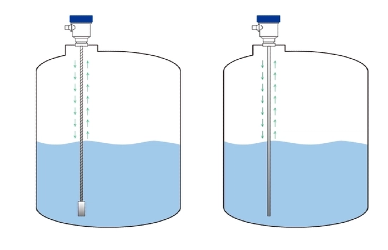
Guided Wave Radar (GWR) transmitters provide high-precision measurements, which improve inventory control and process optimization. With accurate level detection, industries can better manage material levels, reduce waste, and optimize production processes, leading to more efficient operations and lower costs.
GWR transmitters are reliable and require low maintenance due to their non-moving parts. This reduces the risk of mechanical failure and minimizes downtime, ensuring continuous operations. Fewer maintenance needs improve overall process efficiency, enabling industries to run smoothly and reduce operational interruptions.
GWR transmitters are versatile, measuring levels in various media, including liquids, solids, and slurries. This adaptability makes them suitable for industries like oil and gas, chemical processing, and wastewater treatment, streamlining operations and increasing efficiency across different applications.
GWR transmitters integrate seamlessly with process control systems, enhancing automation and operational efficiency. Real-time data and automated responses help optimize processes, reduce human error, and improve decision-making, making operations more efficient and better coordinated.
Guided Wave Radar (GWR) transmitters significantly reduce the risk of accidents and equipment failure in hazardous environments. Their non-contact measurement prevents direct exposure to flammable or hazardous materials, minimizing the chance of sparks or electrical failures that could lead to explosions or fires. By providing precise and reliable level measurement, GWR ensures safe operation, especially in industries like oil and gas, chemicals, and mining.
GWR transmitters offer higher accuracy and better process control, improving operational efficiency. Precise level readings enable better inventory management, optimized flow control, and reduced risks of overfills or dry running. This accuracy streamlines processes, enhances performance, and reduces waste, resulting in higher productivity and smoother operations in hazardous areas.
With low maintenance and high reliability, GWR transmitters reduce maintenance costs and downtime. The absence of moving parts minimizes mechanical failures, leading to fewer repairs and maintenance. This reduction in downtime contributes to significant cost savings, improving overall operational efficiency and lowering the total cost of ownership over time.
GWR transmitters are designed to meet safety standards like ATEX and IECEx, ensuring compliance with regulations for hazardous areas. These certifications guarantee that GWR transmitters can safely operate in explosive atmospheres without ignition risks. Using GWR technology helps companies stay compliant with industry regulations, improving safety and avoiding costly fines or penalties.
Yes, Guided Wave Radar (GWR) Level Transmitters are versatile and can measure both liquids and solids. They are suitable for various industries like oil and gas, chemical processing, and wastewater treatment, handling different media such as slurries, viscous liquids, and powders in hazardous environments.
Compared to ultrasonic and capacitance technologies, GWR transmitters offer superior accuracy and safety in hazardous environments. GWR handles high-pressure, high-temperature, and dense media better than ultrasonic systems and provides non-contact measurement, reducing risks in explosive atmospheres, unlike other technologies that may be less reliable in such conditions.
GWR transmitters are low-maintenance due to their lack of moving parts, reducing the risk of mechanical failure. They are highly durable in harsh conditions like extreme temperatures and high pressures, leading to less downtime and reduced maintenance costs, improving operational efficiency.
Yes, GWR transmitters used in hazardous areas must meet safety standards like ATEX and IECEx certifications. These ensure safe operation in explosive atmospheres and guarantee that the transmitters won’t pose ignition risks, helping companies stay compliant with industry regulations.
Guided Wave Radar (GWR) Level Transmitters offer significant advantages in hazardous areas, particularly in terms of safety and efficiency. With their non-contact measurement, GWR transmitters minimize the risk of accidents, such as explosions or fires, by avoiding direct exposure to flammable or hazardous materials. Their high accuracy ensures reliable level measurements, preventing overfills and dry running, which could lead to costly system failures. Additionally, the low-maintenance design and robust construction of GWR transmitters reduce downtime and maintenance costs, enhancing overall operational efficiency. With certifications like ATEX and IECEx, GWR technology meets the stringent safety standards required for use in explosive environments, ensuring compliance with regulations. For industries operating in challenging and hazardous environments, GWR transmitters provide a reliable, precise, and safe solution for level measurement needs.


