YTP
JIECHUANG
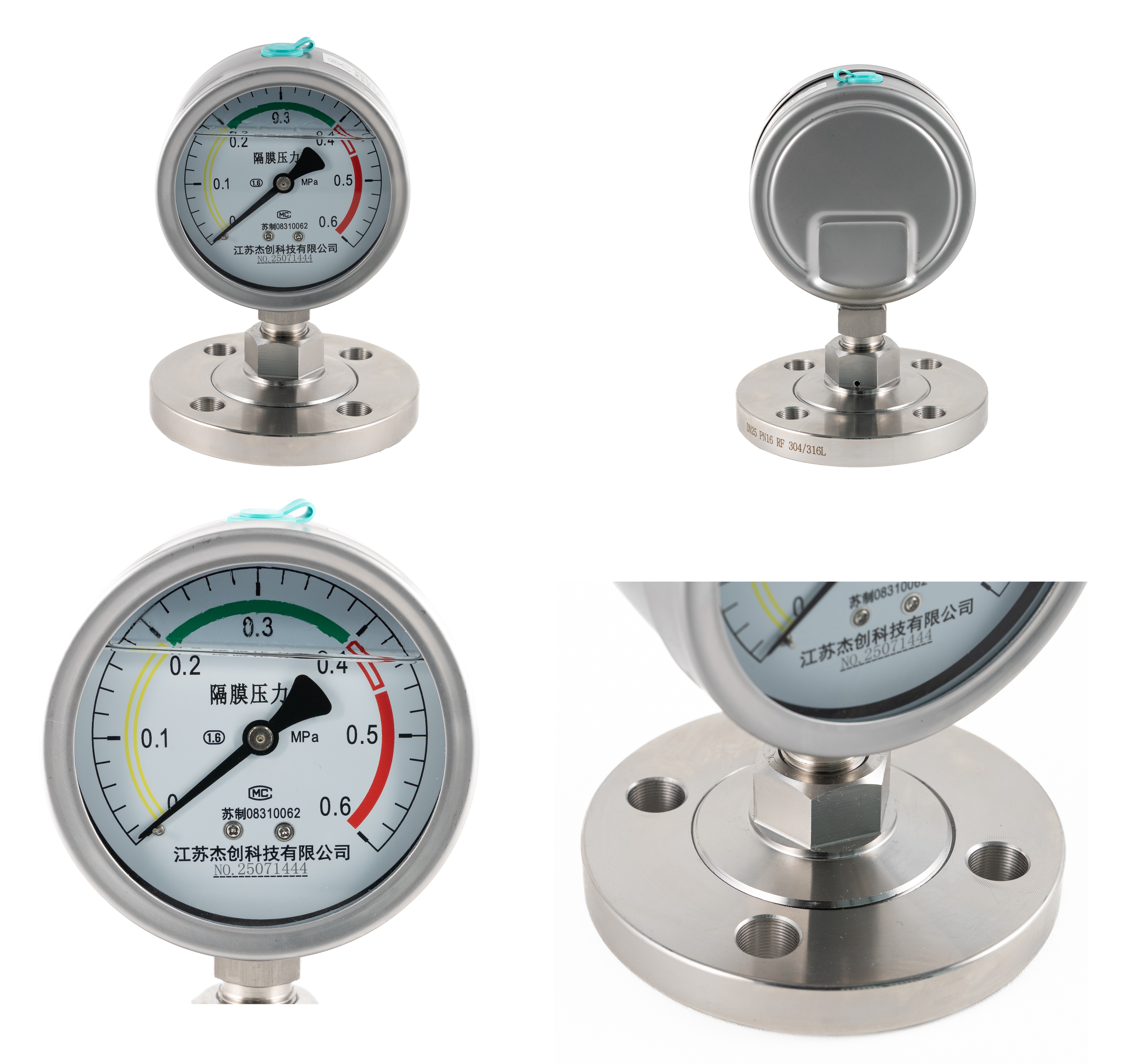
The liquid filled diaphragm pressure gauge is designed for accurate and stable pressure indication in harsh industrial environments where vibration, pressure pulsation, or aggressive media are present. By filling the gauge case with liquid such as glycerin or silicone oil, internal components are effectively protected against vibration and shock, resulting in smoother pointer movement and extended service life.
The diaphragm seal structure isolates the process medium from the measuring mechanism, preventing clogging, corrosion, and damage caused by viscous, corrosive, crystallizing, or solid containing media. This makes the gauge especially suitable for demanding process applications where conventional pressure gauges may fail.
With its robust construction and excellent resistance to vibration and pressure fluctuations, the liquid filled diaphragm pressure gauge is widely used in chemical processing, petrochemical, power generation, pharmaceuticals, food and beverage, and wastewater treatment industries, providing reliable local pressure monitoring under severe operating conditions.
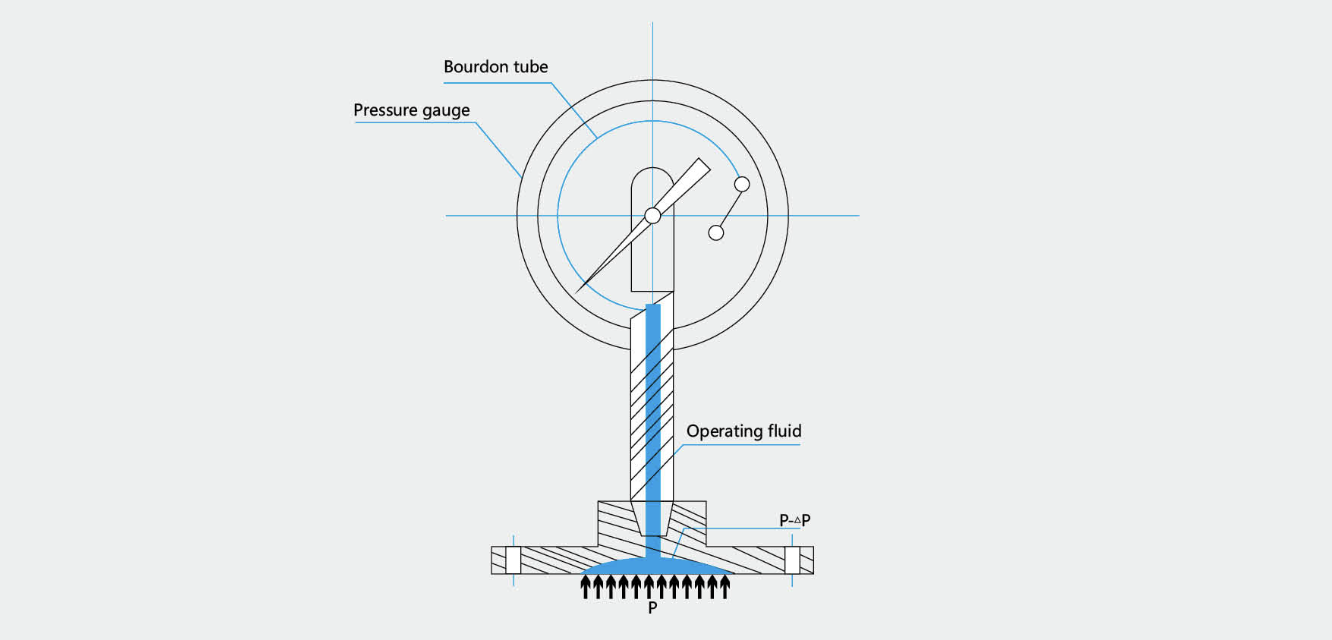
When the pressure P of the measured medium acts on the diaphragm,the diaphragm deforms and compresses the sealing fluid in the pressure measurement system of the instrument,generating a pressure of P-△P;when the rigidity of the diaphragm is sufficiently low,△P remains minimal,and the pressure formed in the pressure measurement system of the instrument becomes approximately equal to the pressure of the measured medium.
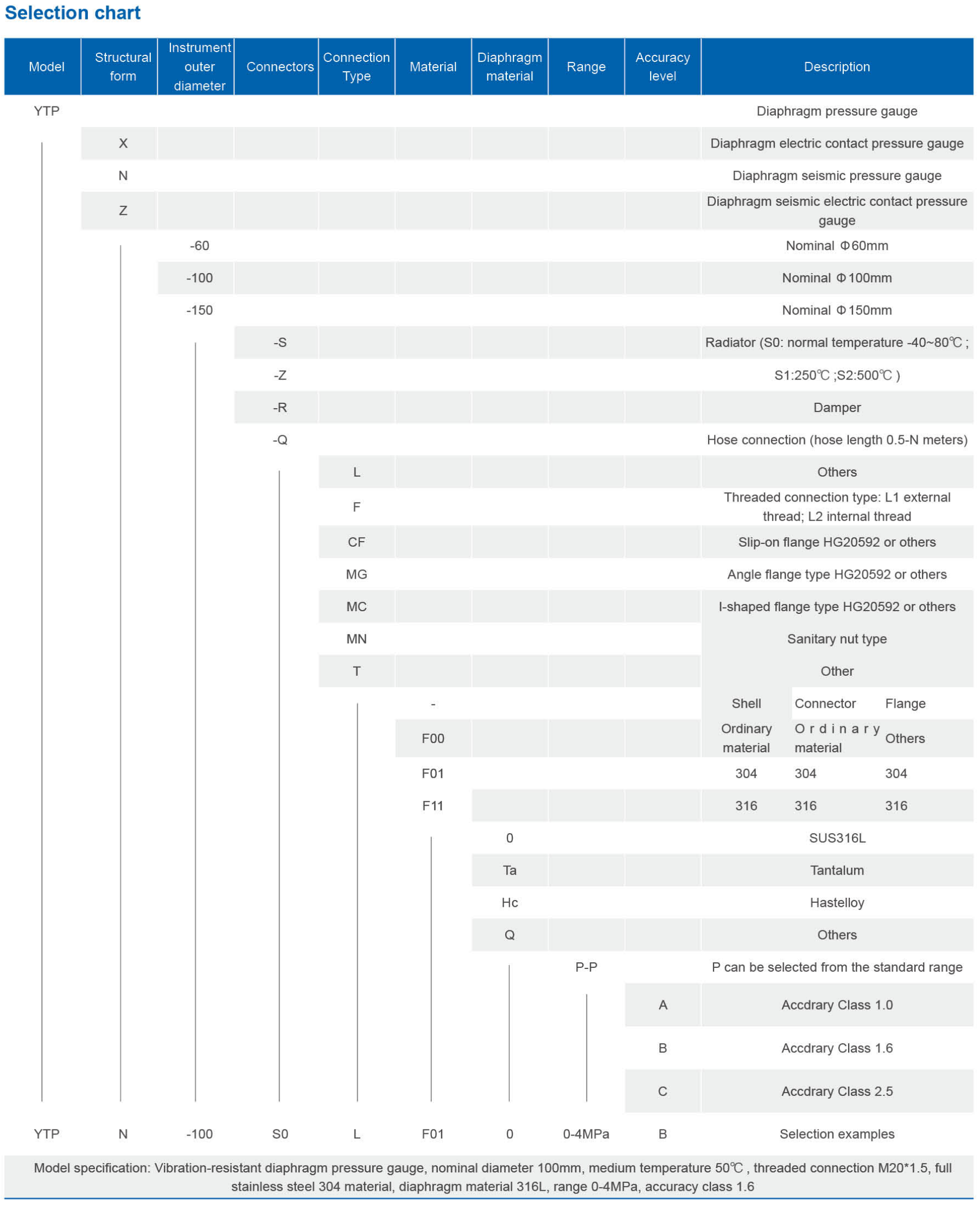
User Guide
● Pressure gauges should be installed horizontally or vertically.
● During installation or disassembly,do not apply torque to the instrument housing by hand;use dedicated wrenches for installation.
● Normal operating ambient temperature is -40℃~+70℃,relative humidity not exceeding 85%.
Table of Measuring Range and Accuracy Class
| Model | Measuring range(MPa) | Accuracy level(%) | Standard connection thread(mm) | ||||
| YTP-60 | 0~(0.10.16/0.25/0.4/0.6/1/1.6/2.5/4/6/10/16/25) -0.1~(0/0.15/0.3/0.5/0.9/1.5/2.4/3.9) | 2.5 | M14*1.5 | ||||
| YTP-100 YTP-150 | 0~(0.1/0.16/0.25/0.4/0.6/1/1.6/2.5/4/6/10/16/25) -0.1~(0/0.15/0.3/0.5/0.9/1.5/2.4/3.9) | 1.6 | M20*1.5 | ||||
| Sealing liquid | Pressure part temperature range | Specific weight g/cm³ | Volume expansion coefficient 1/℃ | Application | ||||
| High viscosity silicone oil | -10~200℃ | 1.07 | 0.95*10-3 | For high temperature use | ||||
| Low viscosity silicone oil | -30~100℃ | 0.94 | 1.08*10-3 | General use | ||||
| Glycerol queous solution | -5~100℃ | 1.27 | 0.61*10-3 | For food use | ||||
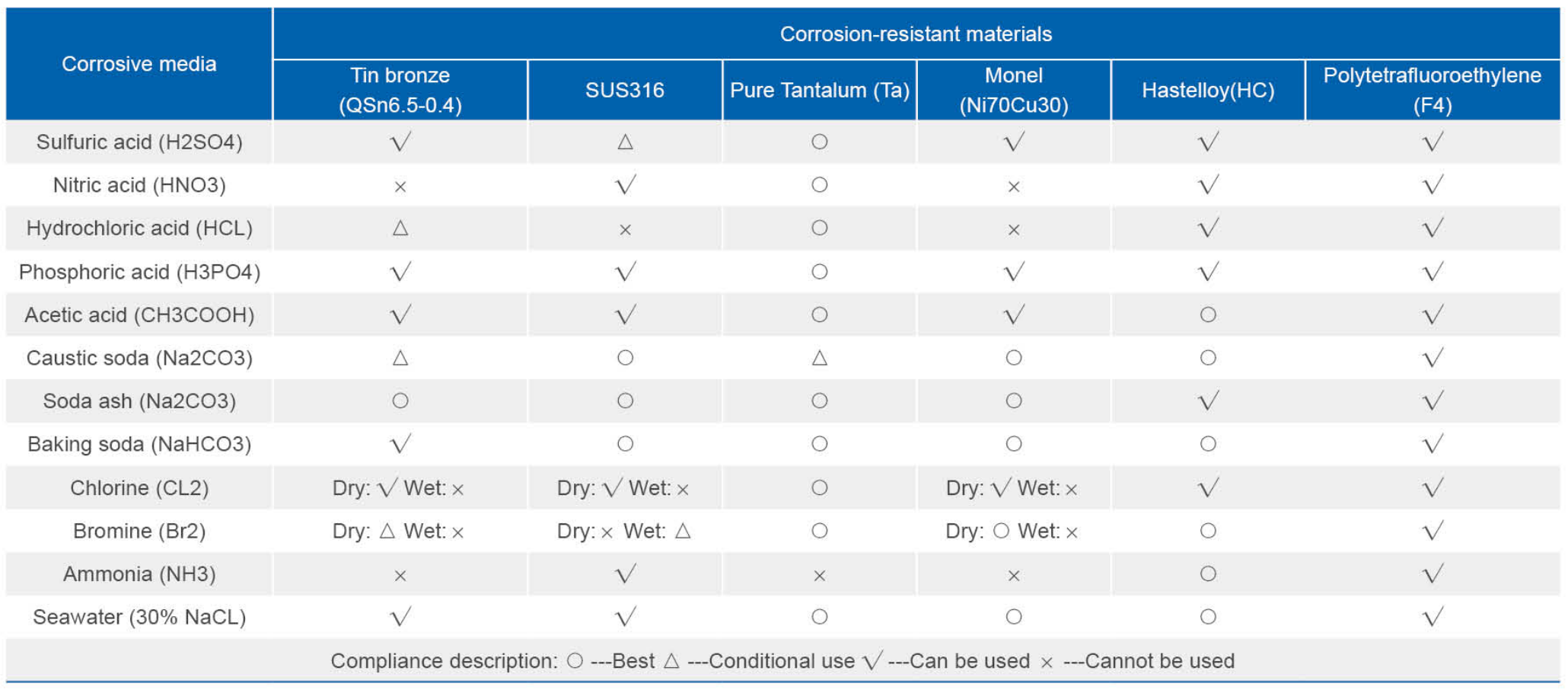
Corrosion resistance of diaphragm
The corrosion resistance of diaphragm gauges is ensured by appropriate material selection for components contacting the measured medium: diaphragm, flange, and sealing gasket;
Diaphragm materials: OCr17Ni12Mo2 (SUS316L), Monel alloy (Cu3ONi70), Hastelloy (H276C), Tantalum (Ta), fluoroplastic (F4);
Flange materials: SUS304, SUS316, PTFE-lined.
Selection of corrosion-resistant materials for diaphragm membrane
Flange selection
| GB | HG | DIN | JIS | ANSI | |||||||||||||
| National Standard | Chemical Industry Ministry Standard | German Standard | Japanese Standard | American Standard | |||||||||||||