
Views: 41 Author: Site Editor Publish Time: 2025-12-31 Origin: Site


V-Cone Flow Meters are widely recognized for their accuracy and reliability in measuring fluid flow in a variety of industrial applications. Unlike traditional flow meters, V-Cone meters utilize a differential pressure design where a cone inserted into the flow stream generates a pressure drop that is directly related to the flow rate. This method offers several advantages, including minimal pressure loss, high accuracy, and the ability to handle challenging flow conditions such as high viscosity, gas-liquid mixtures, and slurries. V-Cone meters also require less straight pipe length for installation, making them more versatile in tight spaces. This article aims to guide readers in selecting the right V-Cone Flow Meter by considering critical factors such as flow range, fluid type, accuracy requirements, and environmental conditions, ensuring optimal performance and efficiency in their specific process needs.
V-Cone Flow Meters measure flow by creating a differential pressure across a cone inserted into the flow tube. As the fluid flows through the tube, the cone causes a localized pressure drop. This pressure drop is directly related to the flow rate, and by measuring the difference in pressure before and after the cone, the flow rate can be accurately determined. The design of the V-Cone allows it to measure flow without needing extensive straight pipe runs, making it ideal for various industrial applications.
Non-invasive: V-Cone meters do not obstruct the flow of the fluid, reducing the potential for wear and tear and minimizing flow disturbances.
Minimal pressure loss: The design ensures that the pressure drop is kept to a minimum, making it energy-efficient.
High accuracy: V-Cone meters provide highly accurate measurements, even in fluctuating or complex flow conditions.
Reliability: The simple yet effective design ensures consistent performance over time with minimal maintenance.
Suitability for challenging applications: V-Cone meters excel in high-pressure, high-temperature, and slurry applications where traditional flow measurement technologies may struggle.
They are capable of measuring liquid, gas, and mixed-phase flows with minimal error, making them ideal for industries like oil and gas, chemical processing, and water treatment.
Versatility in harsh conditions: The V-Cone’s ability to measure complex, viscous, or particulate-laden fluids without significant loss in accuracy sets it apart from other flow measurement technologies.
When selecting a V-Cone Flow Meter, it’s crucial to determine the flow range required for your process. V-Cone meters are suitable for a wide range of flow rates, but it’s important to match the flow rate of your application with the capabilities of the meter. Consider whether the meter needs to measure low, medium, or high flow rates and choose a V-Cone that can accommodate these ranges efficiently.
Different fluids have different flow characteristics that can affect the performance of your V-Cone meter:
Liquids: For standard liquid applications, such as water or chemicals, ensure the V-Cone is suitable for the viscosity and density of the fluid.
Gases: V-Cone meters can measure gas flow with high precision, but factors like temperature, pressure, and gas type must be considered.
Slurries: For slurry applications, the V-Cone is ideal as it can handle suspended solids without clogging or impacting accuracy.
Consider the viscosity, temperature, and pressure of the fluid, as these characteristics influence the meter's performance and the required material and design of the meter.
Evaluate the level of accuracy your process demands. V-Cone flow meters are known for high precision across a broad range of conditions, often outperforming traditional technologies like orifice plates or turbine meters. Ensure that the accuracy offered by the V-Cone aligns with your process needs, especially in applications where precise flow measurement is critical, such as in oil and gas, chemical processing, or water treatment.
The installation environment plays a key role in the selection process:
Temperature and Pressure: Ensure the V-Cone can withstand the environmental conditions of the application, such as extreme temperatures or high pressures.
Vibration: If the installation site has high vibration levels, make sure the V-Cone is robust enough to maintain accuracy under these conditions.
Space Constraints: The V-Cone meter generally requires less straight pipe length than other flow meters, but it's still important to consider the available space for installation and the need for upstream and downstream straight pipe lengths.
Finally, evaluate the total cost of ownership. While V-Cone flow meters may have a higher initial purchase price compared to traditional flow meters, their long-term cost efficiency should be considered:
Maintenance: V-Cone meters typically require less maintenance due to their robust design and fewer moving parts.
Downtime savings: Accurate flow measurement reduces downtime caused by operational issues, ultimately saving money in the long run.
Return on investment: Factor in the benefits of reduced maintenance, fewer calibration needs, and higher efficiency in your process when calculating the overall value.
Standard V-Cone Flow Meters are designed for a wide range of industrial applications, offering reliable and accurate flow measurement for liquids, gases, and steam. They are ideal for industries like chemical processing, water treatment, and energy generation, where high accuracy is essential under moderate operating conditions.
Sanitary V-Cone Flow Meters are built for food, beverage, and pharmaceutical applications, where hygiene and easy cleaning are critical. These meters have smooth surfaces and are designed to comply with sanitary standards, ensuring no contamination in the measurement process. They are perfect for liquid applications like milk, beverages, and chemicals.
High-Pressure V-Cone Flow Meters are designed for extreme pressure conditions, making them ideal for oil and gas, power generation, and chemical industries. They can handle high-pressure and high-temperature flows, providing accurate measurements in challenging environments where other meters may struggle.
Custom V-Cone Flow Meters are tailored to meet the needs of specialized applications, such as extreme temperatures, viscosity, or unique fluid types. These meters are used in industries like pharmaceuticals, petrochemicals, and custom manufacturing, where off-the-shelf solutions may not be suitable.
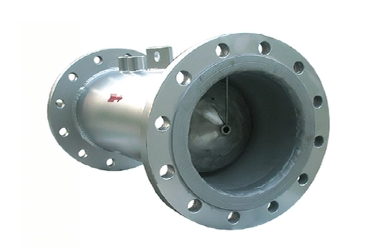
Choose the correct pipe size to match the V-Cone Flow Meter specifications for accurate flow measurement. Ensure the meter is installed in the right orientation—typically horizontally—to avoid issues like gravity effects or material accumulation, unless otherwise specified.
Adequate straight pipe length both upstream and downstream of the meter is essential to prevent flow disturbances. Generally, a minimum of 10-20 pipe diameters upstream and 5-10 downstream ensures accurate measurements.
Regular calibration is critical to maintain accuracy, especially after changes in the process or fluid properties. Routine cleaning of the meter and probe helps prevent material build-up, ensuring consistent performance and long-term reliability.
Yes, V-Cone Flow Meters are versatile and can accurately measure both liquids and gases. They are ideal for a wide range of applications, including oil and gas, chemical processing, and water treatment. V-Cone meters handle liquids like water and chemicals as well as gases such as air, steam, and natural gas with high accuracy. Their ability to manage varying flow conditions, such as changes in pressure, temperature, and fluid characteristics, makes them suitable for diverse industrial settings.
Compared to traditional differential pressure flow meters like orifice plates and turbine meters, V-Cone Flow Meters offer several advantages:
Accuracy: V-Cone meters provide more accurate readings in fluctuating flow conditions and are less sensitive to upstream disturbances.
Installation: V-Cone meters require less straight pipe length (compared to orifice plates), simplifying installation in confined spaces.
Maintenance: The V-Cone's robust design requires less maintenance than traditional systems, especially turbine meters, which have moving parts susceptible to wear and damage.
While V-Cone Flow Meters are highly versatile, they may not be suitable in the following situations:
Extremely low flow rates: V-Cone meters may not be as accurate in measuring very low flow rates (below the specified minimum flow range).
Highly viscous liquids: In applications with highly viscous fluids, the accuracy of V-Cone meters could be affected, and alternative technologies like positive displacement meters may be more appropriate.
V-Cone Flow Meters are relatively low-maintenance, but regular upkeep is important to maintain long-term performance:
Cleaning: Regular cleaning of the probe is essential to prevent build-up of materials that could obstruct the flow and affect measurement accuracy.
Calibration: Periodic recalibration ensures that the meter provides accurate readings, especially after any changes in the process or fluid properties.
Inspection: Regular inspections for wear or damage, especially in harsh environments, are necessary to avoid any performance issues.
When selecting a V-Cone Flow Meter, it’s important to consider key factors such as flow range, fluid type, accuracy requirements, and the installation environment. Each application has unique needs, and choosing the right V-Cone meter ensures optimal performance and efficiency. Carefully assess your process requirements and, if necessary, consult with manufacturers or experts to ensure the best fit. The long-term benefits of using V-Cone meters are clear: they provide high accuracy, reliable performance, and cost-effectiveness, especially in challenging or fluctuating flow conditions. By investing in a V-Cone Flow Meter, you can enhance your process reliability while reducing maintenance costs and downtime.


